
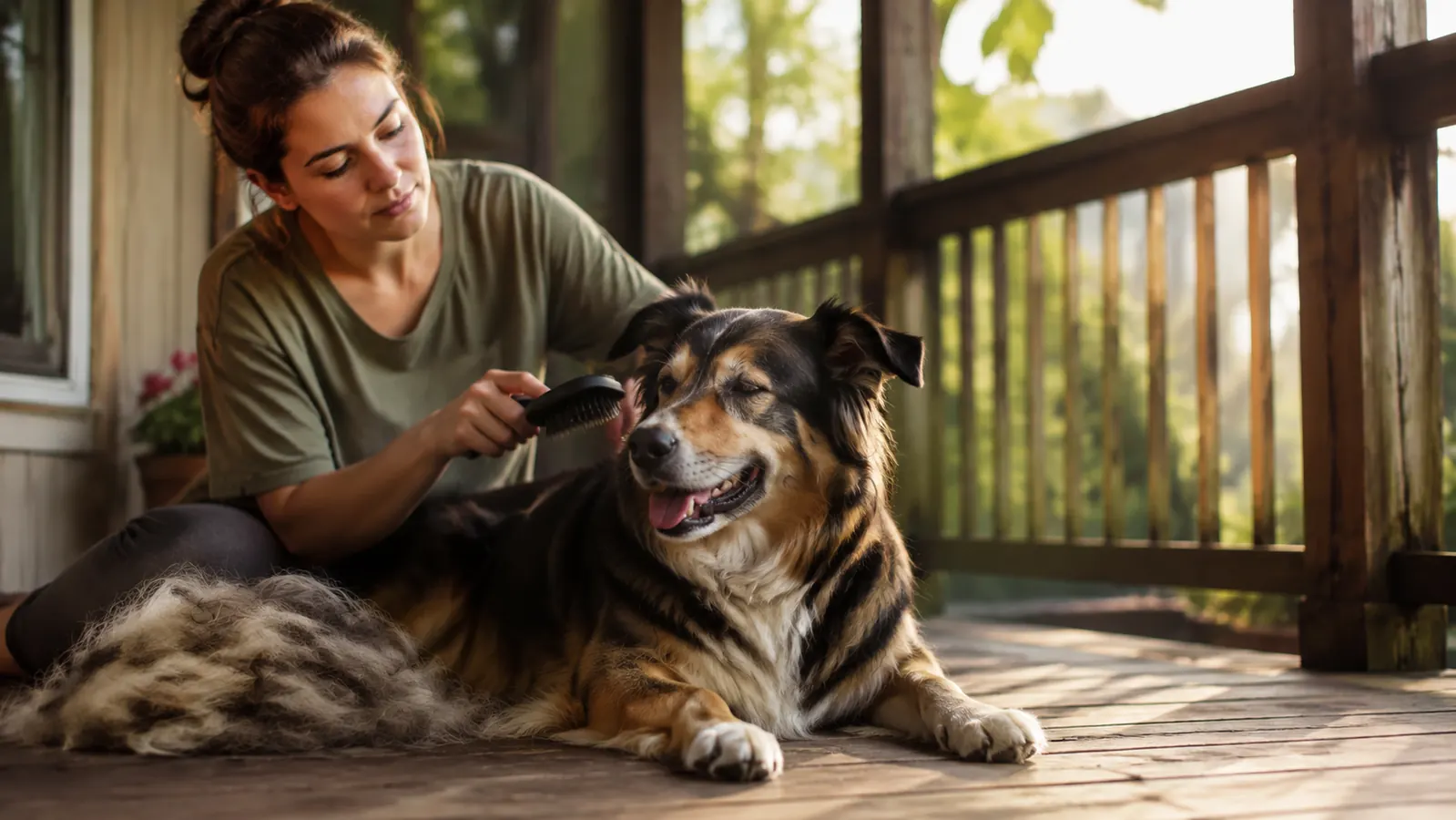
There is a difference between brushing a dog and actually getting at what is causing the shedding. Most of the fur that ends up on your couch is undercoat, and a normal brush skims right over the top of it. So you can brush every day and still find hair on everything you own. A deshedding rake is the tool that reaches that undercoat, and it does it far better than a standard brush.
The Maxpower Planet grooming rake has been my go-to for this for years, and it is the one I reach for the moment a double-coated dog starts blowing its coat. It is a double-sided rake, extra wide, built to pull loose undercoat out at the root instead of just pushing surface hair around. If you have a dog that sheds, this is a tool worth learning to use properly, because used the right way it can cut the fur on your floors and furniture by a large margin.
The good news is that you do not need a pile of expensive grooming equipment to see a real difference. One well-made rake, used on a schedule, does the heavy lifting. The Maxpower Planet rake has the reach and the double-sided head to handle the job, and it holds up to regular use, which is why it carries so many reviews. The rest is just consistency.
The rake that pulls the undercoat before it hits your couch
The Maxpower Planet double-sided deshedding rake reaches the loose undercoat a normal brush can't. It's the tool I reach for on every double-coated dog, and it costs a fraction of a grooming visit.
Amazon Check Today's Price on Amazon →Step 1: Understand why the rake works before you pick it up
A double-coated dog has two layers: a stiff topcoat and a soft, dense undercoat underneath. The undercoat sheds in seasonal blowouts, usually a big one in spring and another in fall. During those windows the loose undercoat that is about to fall still sits against the skin, held in place by the topcoat. That is the hair you are fighting, and no amount of quick surface brushing will get at it, because it is buried under a second layer of fur.
A deshedding rake has rows of long teeth that push down through the topcoat and grab that undercoat. Because the Maxpower Planet rake is double sided, one edge uses long teeth for deep undercoat work and the other has shorter teeth for the surface. You get both passes from one tool, which is why a single rake can do what a rack of separate brushes tries to do.
Know what you are working with first. This tool shines on double-coated and heavy-shedding dogs, the retrievers, the shepherds, anything with a real undercoat. It is not meant for thin single coats or short-haired dogs that barely shed. And it is not a substitute for a proper slicker brush on a matted coat. If your dog is badly matted, do not rake the mats; that pulls skin. Get the mats out first or go to a groomer. Knowing which job the rake does keeps you from using it for the wrong one.
The loose undercoat that is about to fall still sits against the skin, held in place by the topcoat. That is the hair you are fighting.
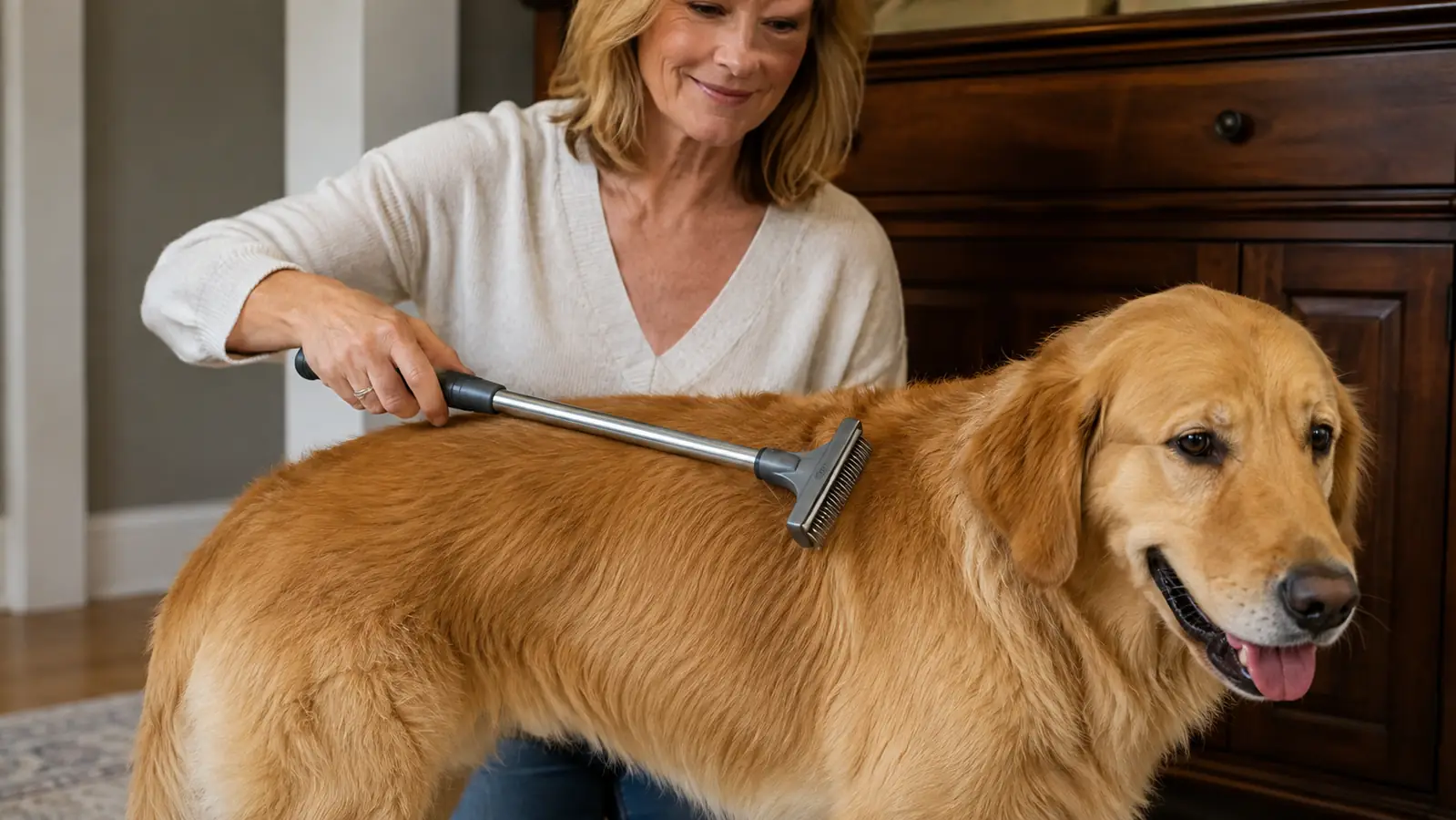
Step 2: Do a good raking session outside when the coat is dry
Set yourself up outside, in a garage, or anywhere you do not mind a blizzard of fur. Do a full-body raking session outdoors and you save yourself a vacuuming marathon inside later. The first full session on a heavy shedder will produce a surprisingly large pile, so putting it somewhere easy to sweep beats watching it drift across the living room. Put the dog on a non-slip surface, like a rug or a grippy mat, so they feel steady and stand still through the session.
The coat should be dry. Never use a deshedding rake on a wet dog. Wet hair tangles more easily and this rake can grab and tug, which turns a calm grooming session into a fight. Dry coat, calm dog, that is the working condition. If the dog just came in from a bath or the rain, wait until they are fully dry before you pick up the rake.
Before you start, run your hand over the coat and feel for any mats or tangles. Work those out with a slicker brush first. The rake is for loose undercoat, not knots. Starting on a matted coat is exactly how you end up with a sore dog and a grooming session that goes wrong, so those extra few minutes of prep are worth every second.
Pick a time when the dog is already calm, after a walk or a settled afternoon, not when they are keyed up watching the door. A relaxed dog stands still and lets you reach the undercoat properly. Some dogs do best with a helper for the first session, someone keeping them steady and feeding treats while you learn the motion, but most settle in quickly once the rake feels routine.
Step 3: Use a light hand and short, even strokes
This is the step almost everyone gets wrong. The instinct is to press hard to get the hair out, and pressure is the mistake. High pressure on a deshedding rake scuffs the skin and can leave red lines down the dog's back. The teeth do the work; your job is just to move them through the coat. If you find yourself pushing down hard to make progress, you are fighting the rake, and the dog is paying for it.
Use short, even strokes that follow the direction the fur grows. Comb the teeth down through the coat, lift, reset above, and go again. The Maxpower Planet handle is long and gives you plenty of reach, so you can work the back, the sides, and the hindquarters without bending over awkwardly. A light, steady hand is the whole secret, and it is the difference between a dog that tolerates the rake and one that hides when you pick it up.
Gather the loose undercoat between the tines and lift it free in a single motion instead of sawing back and forth. Sawing drags the teeth across the skin in a way that chafes. A firm, clean lift pulls the shed undercoat out the way it is meant to come. You will see the fur collect in belts on the tines as you go, which is the satisfying proof that the tool is working.
Step 4: Work one area at a time and stop before the dog gets antsy
Do not try to do the whole dog in one go, especially the first few sessions. Work one section at a time, and the back and the ruff are the highest-shedding spots on most dogs. Give the dog breaks between sections. A stressed dog is a squirmy dog, and a squirmy dog is how you slip and pull skin, or how a calm routine turns into a chore you both dread.
How long you rake depends on the dog. Five to ten minutes a session is plenty for the first few passes, and often enough after that. As you go, check the pile of fur you have pulled. When the pile clearly stops growing, you have gotten the loose undercoat that was ready to come out. Stop there. Raking until no hair comes out at all is a fool's errand, because a dog always has more hair to give, and you will just be dragging the teeth across skin with nothing to show for it.
End every session on a good note. A treat, a scratch behind the ears, a minute of play, done. If the dog learns that rake time ends with something pleasant, the next session is easier, and before long they will stand for it without fuss. Most dogs tolerate this tool well precisely because it does not tug when used right, and that steady, predictable routine is what builds their tolerance.
Step 5: Build it into a routine and clean the rake after
One heroic session every six months will not fix your shed problem. The routine is what works. During a blowout, rake every two to three days to stay ahead of the loose undercoat as it releases. Between blowouts, once a week is usually enough to keep things manageable. A couple of shorter sessions spread through the week beat one exhausting marathon, for both the dog and the pile of fur on the floor.
Combining the rake with a regular slicker brush keeps the topcoat smooth and the undercoat thin. The rake pulls the depth, the slicker smooths the surface, and together the two handle almost every double-coated dog. This is the pairing I recommend to anyone with a shedder, and it is how you get the coat looking clean instead of just less hairy.
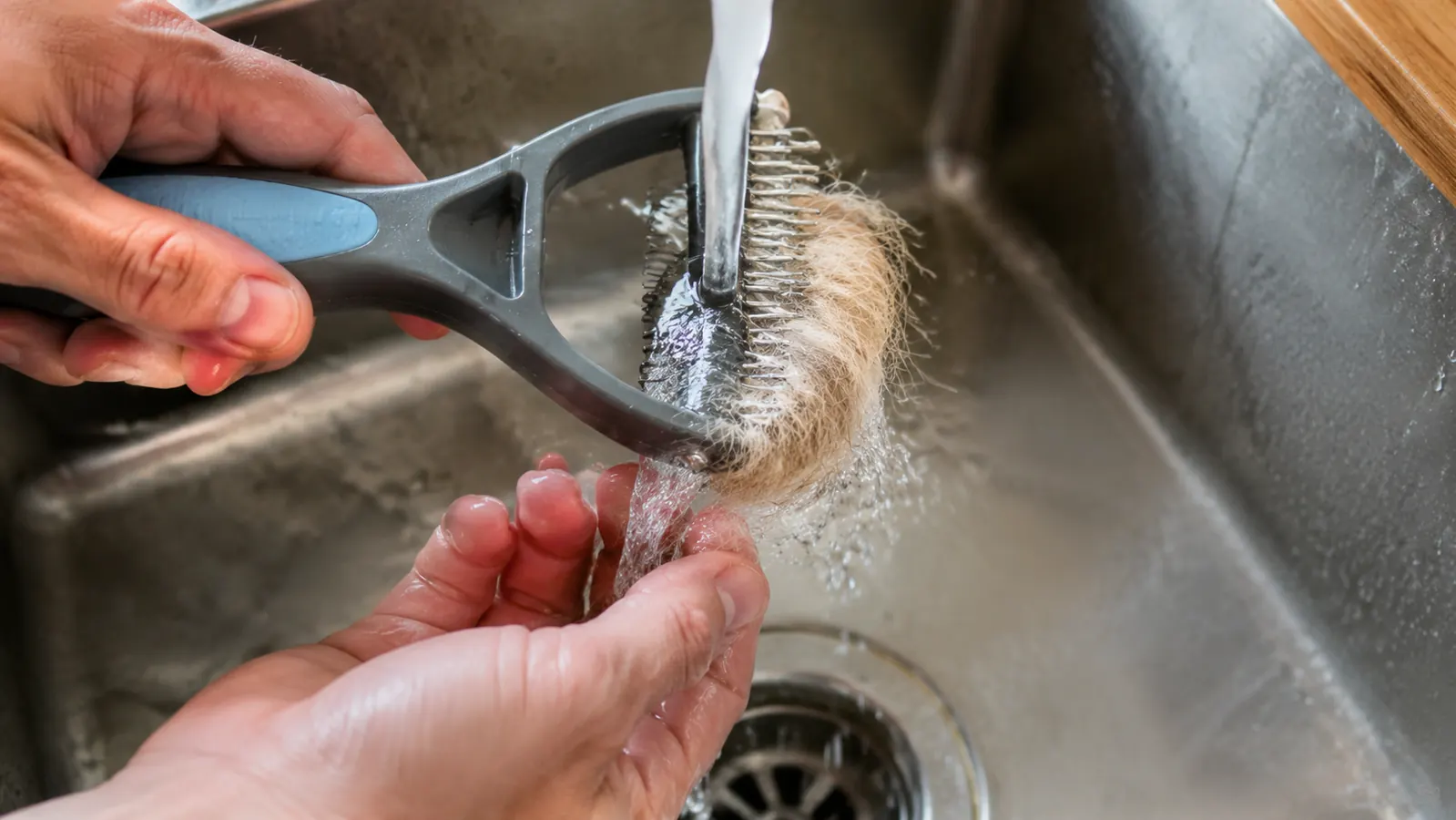
Clean the rake after every use or the teeth grab nothing next time. Pull the fur belt off the tines by hand, then rinse the head under warm water and let it dry fully before you put it away. It takes thirty seconds and keeps the tool working. A clean rake is a working rake, and a tool that lasts is one that actually gets used.
What Else Helps
The rake handles the hair, but shedding is also driven by coat health, and that is where routine comes in. A steady grooming schedule, regular brushing with a slicker, and good nutrition keep the undercoat from building up in the first place. If you see bare patches, excessive itching, or a sudden sharp increase in hair loss, that is a sign to flag to your vet, not a problem to groom away. Shedding is normal, but a change in shedding pattern can be a clue about something underneath.
During the heaviest shedding weeks, a deshedding shampoo used at bath time followed by a rake once the coat is completely dry can pull even more loose undercoat. Just never combine water and the rake in the same moment, because a wet coat plus a rake is a recipe for tangles. And remember the furniture. Covering the worst spot with a washable throw during a blowout saves you hours of lint rolling, so the grooming work you actually do shows instead of being overwhelmed by what keeps landing on the couch.
When to Hand It to a Professional
There comes a point where home grooming is not the answer. If your dog has a heavy matted coat, a coat the dog will not hold still for, or a breed with a coat that needs specialist care, let a groomer take the first pass. A professional can safely remove the built-up undercoat that a nervous owner will struggle with, and they have the equipment and the experience to do it without incident. Once they reset the coat, you keep it maintained at home with the rake and a steady schedule. Sticking to your schedule through the shedding season is what keeps you ahead of the fur, and most people find the routine takes less than ten minutes once it is built.
Start where the undercoat actually lives
The Maxpower Planet double-sided rake pulls loose undercoat at the source, so a ten minute session outdoors means days without fur on the furniture. It is the simplest upgrade in most grooming kits.
Amazon Check Today's Price on Amazon →