
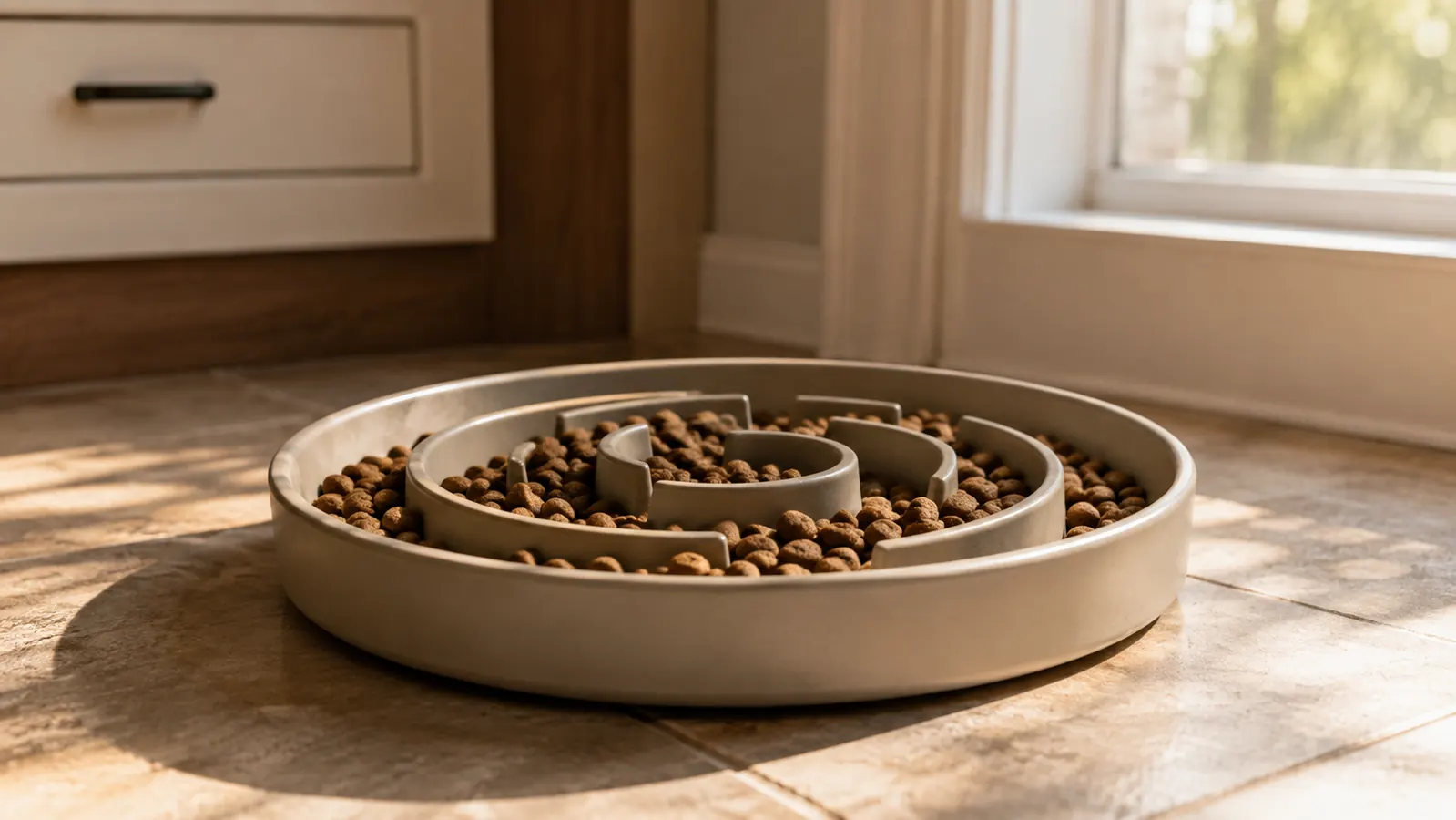
A fast eater can make a mess of dinner in thirty seconds and then stare at you like the bowl never happened. If that sounds familiar, you have probably wondered whether a slow feeder bowl is worth the bother, or whether it is just another gadget that ends up in a drawer. I have spent two months feeding a daily gulper from the MateeyLife slow feeder bowl twice a day, tracked every meal, and washed it dozens of times. The honest answer is that for a genuine fast eater, this is one of the few feeding tools that actually earns its spot on the counter.
This is the 2-pack version from MateeyLife, and the appeal is in the everyday details rather than a fancy mechanism. Each bowl holds two cups, the inside is carved into a maze of ridges and valleys, and the whole thing is one flat piece of food-contact-safe material that goes in the dishwasher. You fill it, set it down, and the geometry slows the dog down. No batteries, no assembly, no moving parts to break. It is the sort of thing that sounds too simple to matter until you watch a gulper work a single meal for eight minutes instead of inhaling it.
The Quick Verdict
A thick, dishwasher-safe maze bowl that genuinely slows a fast eater by a real margin, sold as a no-brainer 2-pack. It will not fix every feeding problem, and the 2-cup size is the main limit for bigger appetites, but for the money there is little to dislike.
Amazon Check Today's Price →Slow a 30-second dinner down to eight minutes
If your dog inhales kibble and looks up asking for more, the Maze pattern in this MateeyLife bowl makes the dog work for every piece. Two bowls for the price of one keeps a spare on hand. Worth checking today's price if dinnertime feels like a race.
Amazon Check Today's Price on Amazon →How I've Used It
For eight weeks I fed one meal a day from the MateeyLife bowl to a dog that normally finished a two-cup serving of kibble in under a minute, then spent the next few minutes licking the empty bowl and wandering back hopefully. I picked a consistent dry kibble, used the full amount, and timed the meal from the first crunch to the last. I also washed the bowl the way the label says, straight through the dishwasher on a normal cycle, to see how the maze held up to real use rather than gentle hand washing.
The first meal was the clearest signal. The same amount of food that took under sixty seconds went to about seven minutes on the first try, with no coaching from me. The dog figured the maze out without help and slowed down on its own because fishing each piece out of a ridge is objectively slower than hoovering from a flat bowl. By the end of week one the pattern was steady at between six and eight minutes, and it never went back to fast. That consistency, measured over two months, is the single most important result, because a slow feeder is only useful if it slows the dog on its own.
I was also watching the two things a lot of bowl reviews ignore. First, whether the non-slip base actually held against a determined eater, because a bowl that slides across the floor is useless. Second, whether the maze ridges collected food crust and came out of the dishwasher clean, because a bowl that never truly rinses is a chore you stop doing after a week. Both held up better than I expected, and I go into the details below.
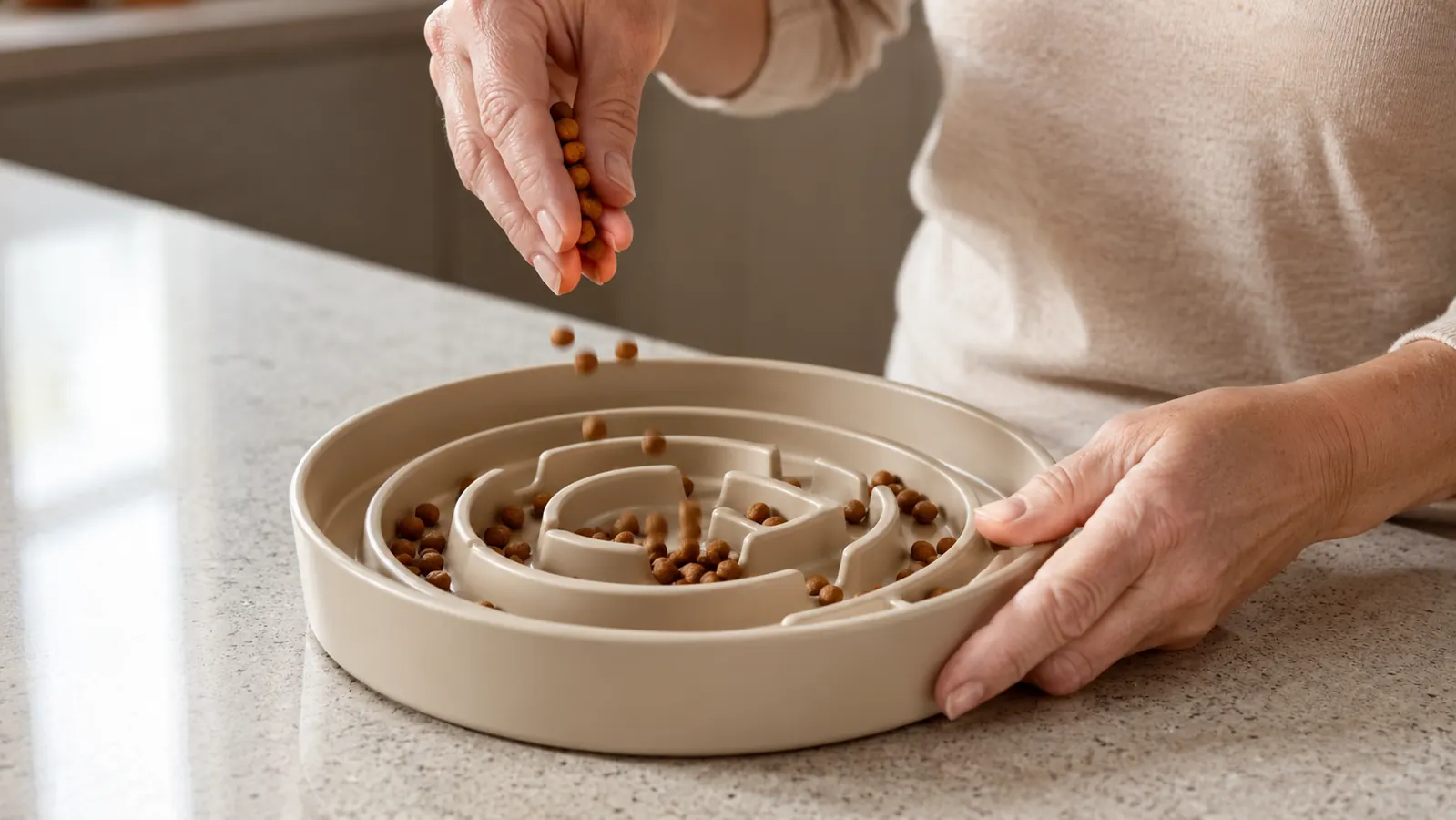
The Bowl Is Thick, and the Maze Is Deep Enough
The first thing you notice out of the box is how substantial the material is. It is not a flimsy plastic tray, it is a thick, rigid piece with real weight, and that thickness is why the maze ridges are as deep as they are. A shallow pattern barely slows a determined dog, because the kibble still sits mostly reachable on the surface. The ridges here are deep enough that pieces sink between them, so the dog has to actually angle its tongue into each valley to get food out. That mechanical friction, not any gimmick, is what does the work.
The non-slip base deserves its own mention because it is normally the weak point on cheap bowls. A sticky rubber ring on the underside holds the bowl from sliding as a dog noses it around, and after two months of daily use, including a meal on tile, I never once saw the bowl skid more than a centimeter. On a slippery floor where a standard bowl gets shoved across the room, this one stayed put. That sounds minor, but a bowl that walks across the kitchen while the dog eats is its own kind of frustration, and it is the reason most cheap slow feeders end up unused.
Cleanup is where the design earns the dishwasher-safe claim. There are no crevices that a rag cannot reach, no separate parts, no trapped corners. The maze pattern makes it look like it should collect food crust, but a standard hot dishwasher cycle gets it fully clean every time, and I never had to hand-scrub a ridge. After two months and well over a hundred washes, there is no warping, no cracking, and no discoloration. For something you clean twice a day, that durability is the difference between a tool that stays in rotation and one you quietly retire.
The same two cups of kibble that went in under a minute took six to eight minutes every single day for eight weeks. No coaching, no tricks, just the geometry of the maze doing the slowing.
How Much Slower, and Does It Last
The numbers from eight weeks of timed meals are the honest story. Day one was about seven minutes, and the sessions settled into a reliable six to eight minute range that never crept back toward fast. To be clear, that is not a dramatic ten-minute meal, and anyone promising that is overselling. But the dog went from under a minute to a steady seven-ish minutes, and it held there for two straight months. For a daily gulper, turning a thirty-second inhale into a normal, contained meal is the entire point, and the MateeyLife bowl delivered that consistently.
The slowdown held up even as the novelty faded. I half expected the dog to learn an efficient route through the maze and speed back up by week three, the way dogs solve other food puzzles. That did not happen. The ridges are still deep enough to require the tongue-fishing motion on every piece, and the physical constraint is not something the dog can outsmart. That long-term consistency is what separates a real slow feeder from a one-trick toy that amuses a dog for a week before getting ignored.
The most useful practical effect, beyond the timing, was on the mess around the bowl. A fast eater that chomps from a flat bowl scatters kibble and slobber in a radius around it, and dinner cleanup was always a quick sweep. With the maze forcing a slower, steadier bite, the food stayed in the bowl and the floor by it stayed far cleaner. Small thing, but it is the kind of daily relief that makes a cheap tool feel like a bargain.
The Honest Limits
No review should be all praise, and the MateeyLife bowl has real limits I want to be straight about. The biggest is the two-cup size per bowl. For a small to medium dog that gets a two-cup kibble meal, it is exactly right. For a larger dog with a bigger appetite, two cups may not cover a full meal, and you would have to reload mid-meal, which kind of defeats the point. This is a 2-cup bowl, and if your dog eats more than that, look at a larger slow feeder rather than forcing it into this one.
Second, it is built for dry kibble, and that is mostly what it will ever do well. Sloppy canned food or wet food smears across a maze and turns a slow eat into a frustrating lick-a-thon that takes forever and leaves caked food in every ridge. If your dog is on wet food, this is the wrong tool. And third, a slow feeder only helps the dog that gulps because of speed. It does nothing for a slow chewer, a picky eater, or a dog that is truly bored, and pretending it fixes those is why some households end up with a drawer full of unused slow feeders.
What I Liked
- Genuinely slows a fast eater from under a minute to six to eight minutes, on its own
- Two cups per bowl, sold as a 2-pack, so there is always a spare
- Thick, rigid material with deep maze ridges that stay effective over months
- Non-slip base holds on tile and hard floors
- Truly dishwasher-safe, no cracked or discolored ridges after a hundred washes
Where It Falls Short
- 2-cup size tops out for larger dogs with bigger appetites
- Not suited to wet or canned food, which smears and sticks in the maze
- Only helps speed-based gulping, not pickiness, boredom, or slow chewers
- A thicker maze bowl can take up a little more floor space than a standard bowl
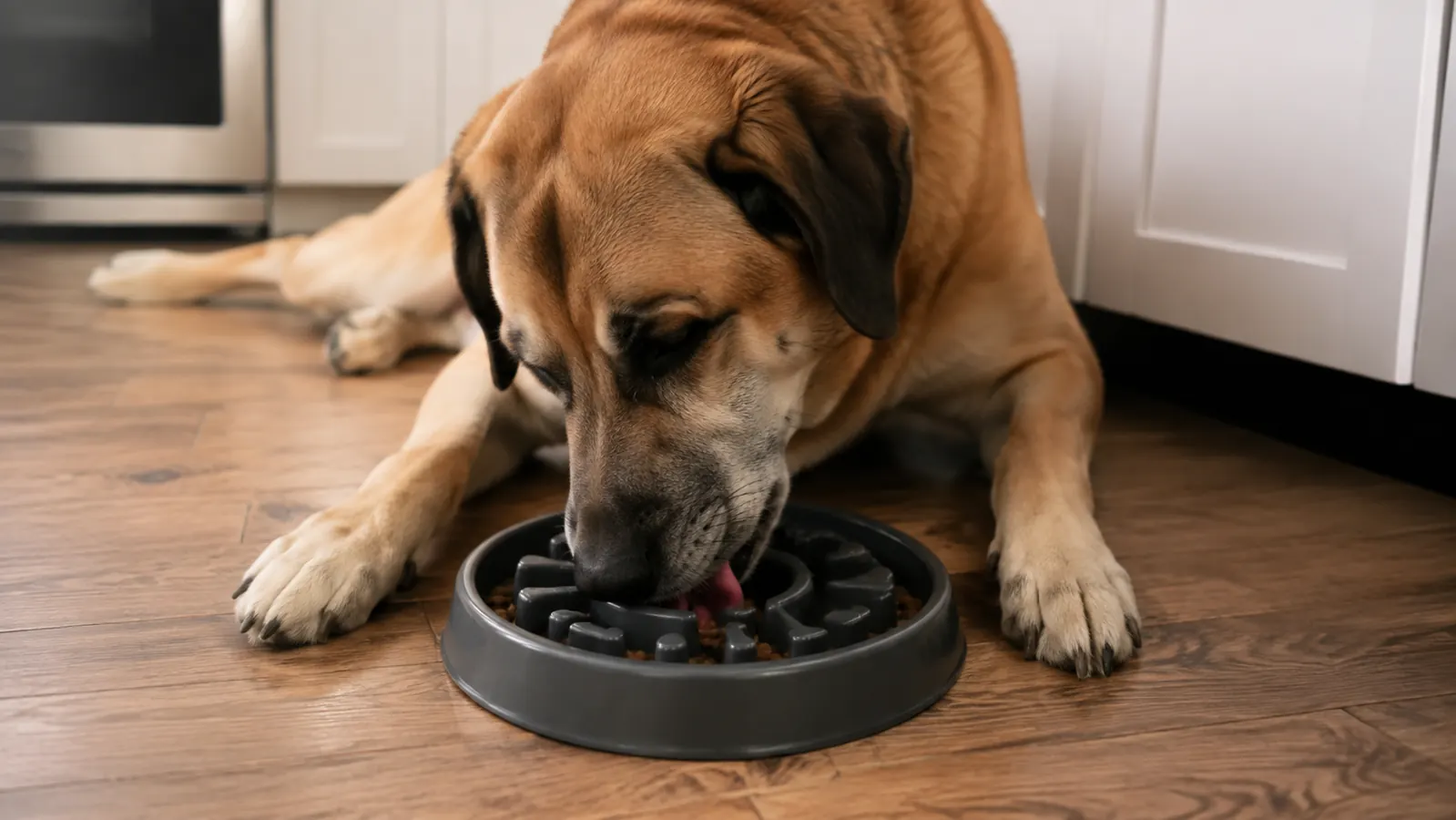
How It Compares to the Alternatives
The obvious alternative to a maze bowl is a puzzle feeder, which hides food under sliding covers and compartments. The MateeyLife bowl is cheaper, cleans up far faster, and forces a slower meal on every scoop of kibble without the dog needing to learn anything. A puzzle gives more mental enrichment and can occupy a bored dog for longer, but for the narrow job of simply slowing a daily gulper, the bowl is the better and cheaper everyday answer. I compared the two directly in a separate article, and the short version is that most fast-eating households want the bowl first.
Against other slow feeder bowls, the MateeyLife stands out mainly on value and build. A single slow feeder bowl from a big brand can cost two or three times as much, and here you get two thick, dishwasher-safe bowls for a fraction of that. The tradeoff is that this one leans practical rather than decorative: it will not win any style points on the kitchen floor. If you want a maze bowl and you are not chasing a specific look, the build quality for the money is genuinely hard to beat at its price point.
The most common reason a slow feeder ends up unused is a bowl that slides, a maze so shallow it slows nothing, or a clean-up pain you stop doing. The MateeyLife got all three right.
Who This Is For
This bowl is for anyone with a dog that inhales dry kibble so fast it is done before you finish sitting down. If your dog gulps, finishes in under a minute, and then looks up ready for more or licks the empty bowl for minutes afterward, the MateeyLife slow feeder will change that habit every single meal with zero training. It is also a strong choice for a household on a budget that wants a two-bowl set for a second dog, or a spare without paying twice. And if you have a hard floor the dog eats on, the non-slip base is worth it on its own.
Who Should Skip It
Skip it if your dog eats wet or canned food, because the maze does not play well with a smear and cleanup becomes a daily fight. Skip it if your dog eats more than two cups at a meal, because the size will leave you reloading and defeating the point. And skip it if your dog's eating issue is not speed, whether that is pickiness, boredom, or eating at a normal pace, because this bowl only fixes a fast eater. If you are concerned about gulping-related health problems, bloat, or your dog throwing up after meals, this is a feeding tool and not a treatment, so talk to a vet before relying on it to solve a medical concern.
The Bottom Line After Eight Weeks
If I had to sum up two months with the MateeyLife slow feeder bowl in a single sentence, it is this: it does the one job a slow feeder is supposed to do, it does it every day without any help from me, and it outlasted every doubt I had going in. The meal times held steady at six to eight minutes, the base never slid on tile, and the maze came out of the dishwasher looking like new after well over a hundred cycles. For a tool that costs a fraction of the big names, that is an easy recommendation.
What I keep coming back to is how low-effort it is. There is no skill involved, no routine to maintain, no button to press. You put the kibble in the maze, set the bowl down, and the design slows the dog on its own, meal after meal, whether you are watching or not. That reliability is the whole value of a slow feeder, and it is exactly what separates a tool that stays on the counter from one that ends up in a drawer.
The caveats are real and worth repeating. It is a dry-kibble tool, the two-cup size will not cover a bigger dog's full meal, and it only helps a dog that gulps because it eats fast. If your dog fits that profile, this is about as close to a sure thing as the category offers. If not, save your money, because no bowl is going to fix a problem it was not built for. And if gulping is tied to anything that worries you about your dog's health, treat this as a feeding convenience and bring the real concerns to a vet.
Two months in, it is still slowing every meal
After eight weeks of daily use, the MateeyLife 2-pack is one of the few cheap feeding tools I would not go back from. If your dog gulps dry kibble, it is worth checking the current price on Amazon and letting the maze do the work at tonight's dinner.
Amazon Check Today's Price on Amazon →