
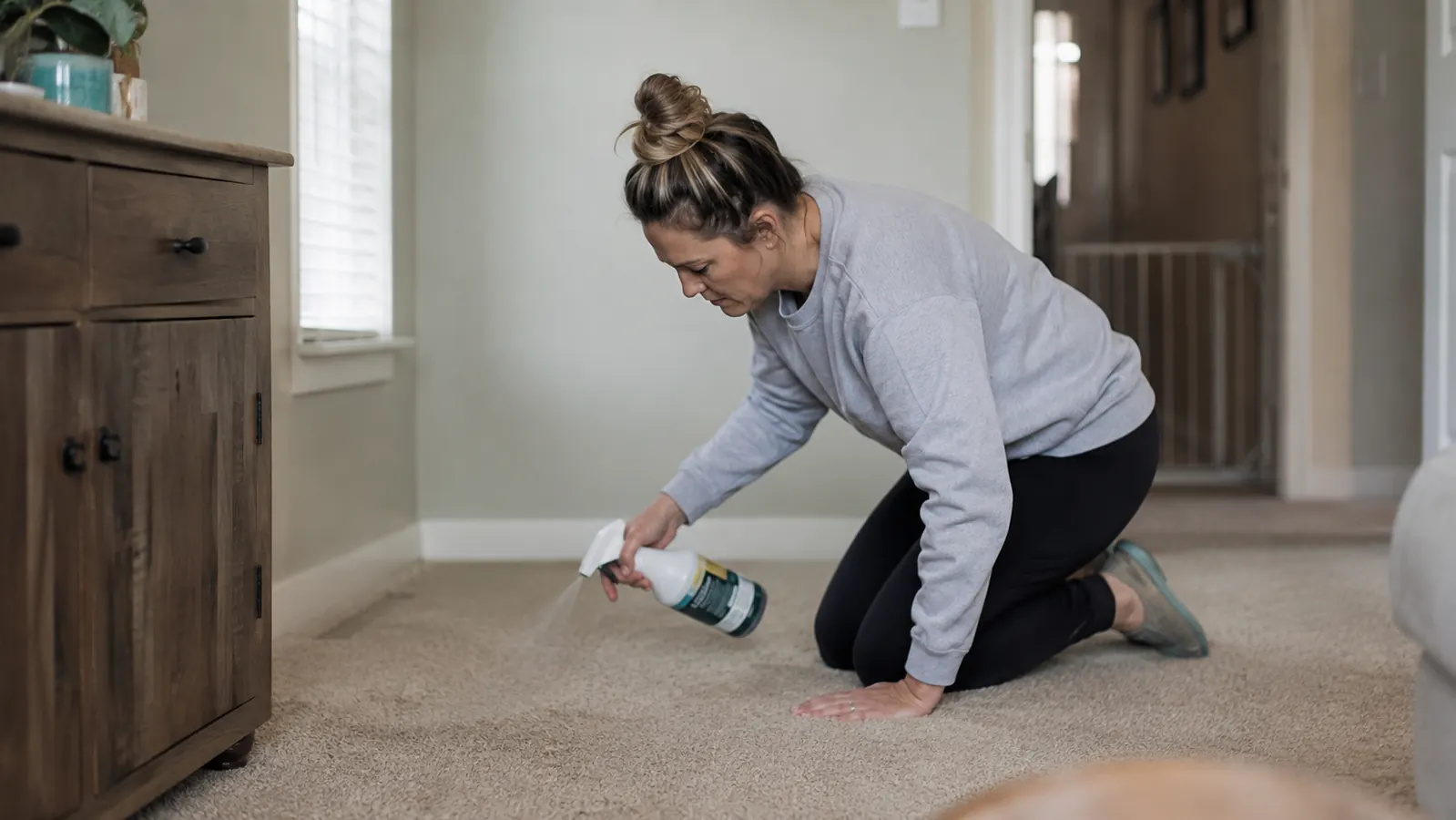
There is a fast-food version of pet cleaning and a slow-cook version, and most of my early years were the fast-food one. You see the mark on the carpet, you spray something that smells like lemon and laundry, you blot, you move on. The spot fades and the room smells fresh for a day. And then, a week later, the dog walks past that same corner and sniffs, circles, and goes again. That is the tell. If an animal will not stop revisiting a spot, the smell is still there under whatever perfume you sprayed on top of it. A pet's nose does not lie about this.
That is why an enzyme cleaner is different in kind, not just in strength. It does not mask the odor. It breaks down the organic waste the smell is made of, so there is nothing left for a nose to find. Rocco & Roxie Stain & Odor Eliminator is one of the most-reviewed bottles in this category, with north of 127,000 ratings, and I wanted to find out what that huge count actually buys. So I ran it through weeks of real messes in the homes I help care for, on carpet, upholstery, grout and bedding, and I tracked whether the spots held up or came back.
The Quick Verdict
The rare cleaner that genuinely removes the odor instead of layering perfume over it, provided you use enough and let it sit. Strong first pick for carpet accidents.
Amazon Check Today's Price →The bottle that finally explains the repeat-accident corner
If you have a spot your dog or cat keeps returning to no matter how many times it gets sprayed, the odor is still in the fibers. Rocco & Roxie is built to eat the source, not hide it.
Amazon Check Today's Price on Amazon →How I've Used It
I have spent years cleaning up after dogs and cats, which means I have spent years watching people try a cleaner once, get an okay result, and never touch it again because the smell came back on day six. Rocco & Roxie works on a different schedule and you have to respect that schedule or it will let you down too. The two rules I check every time: use enough, and let it dry without scrubbing the air into it.
Over several weeks I tested it on fresh urine on a carpeted stair, on a dried stain that had been there for days, on a sofa cushion after a dog got nervous during a storm, and on the grout line in a bathroom where a cat had started marking the same corner. I also used it on bedding. For each one I followed the same routine: soak the stain until the fibers are visibly wet, let it sit for the full dry time, and resist the urge to dry it fast with a hair dryer or a hard brush, because rushing the dry is how people throw away the enzyme's work.
The thing I paid closest attention to was not the first day. It was day four and day seven. A cleaner that smells fine on day one is easy. The test is whether the dog or cat still thinks that spot is a toilet a week later. If they do, nothing worked, no matter how good the room smells.
Why the Enzyme Step Makes the Difference
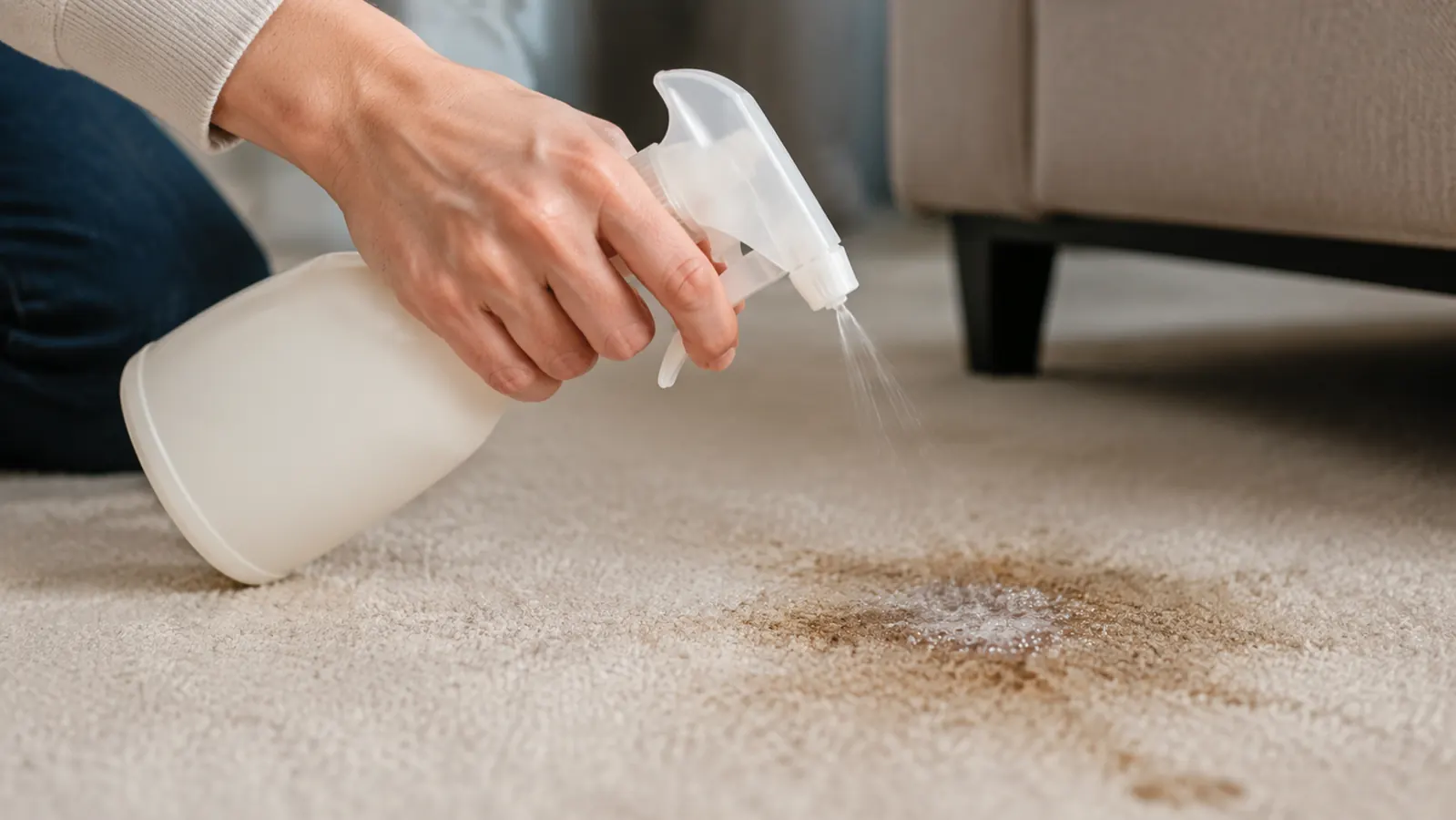
Urine is mostly water, but the part that smells is a mix of compounds, urea and ammonia on the way to breaking down, plus some others. Ordinary cleaners and soaps can lift the visible stain and rinse away a lot of the liquid, but they leave traces behind, especially once the spill soaks past the surface of a carpet into the pad underneath. Those traces are what a dog's nose picks up, and what draws the animal back to the same corner.
An enzymatic cleaner works the other way. It carries living enzymes, biological proteins that feed on exactly the waste you are trying to remove. Applied to a fresh or old stain, the enzymes break the uric acid and other compounds down into smaller pieces that no longer smell and no longer read as a marking target. That is the real job. The fresh smell the product has right out of the bottle is mostly an afterthought; the point is that the smell does not come back because the source is gone.
The honest catch, and it's a real one, is that enzymes only work where they can reach. If a spill has soaked through a carpet into the pad, a surface spray may clean the top and never touch the part underneath, so the smell can return from below. For deep older accidents you often need to work the cleaner deeper or bring in a machine. Rocco & Roxie handles the majority of daily messes, but I would not pretend one pass of any spray fixes a soaked-through pad.
What It Handled Well Over the Weeks
The standout was a dried stain on a light-colored stair carpet, the kind a cleaner normally ignores because it arrived a day too late. I soaked it thoroughly, left it to dry overnight, and by morning both the stain and the smell were gone. That was the result that kept me testing, because old dried urine is where most products quietly give up.
The sofa cushion after the storm was the next good one. That was a nervous-animal accident, heavy and fresh, and it needed two passes with a good soak between them. After the second pass and a full dry, the cushion came out clean and no one in the house could smell it, including the dog who sat on it the next evening without a second sniff.
On grout it was genuinely satisfying to watch. A cat had fixed on the corner of a bathroom where the tile met the floor, and the grout in that seam had gone dark. Rocco & Roxie, with a stiff brush and a decent soak, lightened that seam and, more importantly, the cat stopped returning to it. When the marking behavior stops on its own, that is the cleaner actually solving the problem instead of the smell masking it.
The real proof was not the clean stair on day one. It was that the dog who used to fixate on that corner stopped going back a week later. A cleaner that drops the repeat visits is doing its actual job.
Where It Falls Short
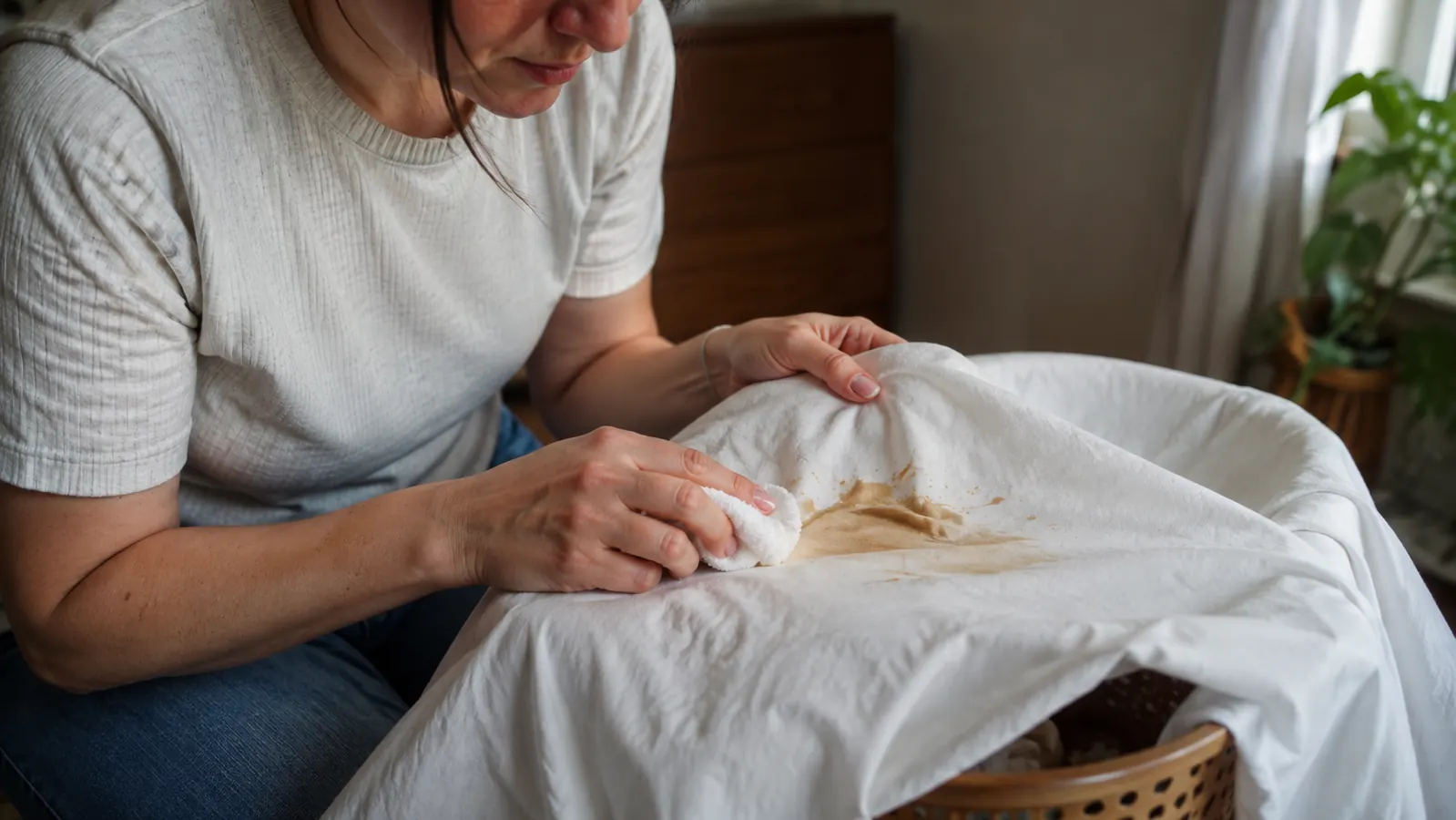
Now the parts the reviews do not lead with. Rocco & Roxie has its own scent, and it is not perfume. It reads as a mild enzyme smell, a little sour and biological, and I found it strongest for the first hour after application. If you are sensitive to smells, open a window while you work. The scent fades as it dries, and I did not feel it lingered on fabric once dry, but the wet phase is noticeable.
It also loses to impatience. This is not a spray-and-wipe product. If you wipe it up after a minute the way you would a surface cleaner, the enzymes never get their dry time and you will conclude it does not work. I would say a fair number of the disappointed reviews on any enzyme cleaner come from people treating it like a spray polish. You have to soak, wait, and let it dry. That is the entire deal.
And it is not a cure for a spot you cannot reach. A surface spray is limited to the surface. If the mess soaked deep into a pad or a mattress and you only treat the top, the smell can come back from underneath. For that you need deeper treatment. This bottle is a strong everyday tool, not a magic wand for a decade-old soaked-through spot.
What I Liked
- Genuinely removes the odor source, so repeat accidents drop on their own
- Handles fresh and dried stains on carpet, upholstery, grout and bedding
- CRI-certified safe for use around pets and babies
- Big 32-ounce bottle and a huge review base that matches the claims
- Made in the USA
Where It Falls Short
- Has a mild biological enzyme smell while wet that takes time to fade
- Only as good as your patience: it needs a real soak and full dry time
- Surface treatment will not fix a mess that soaked through into the pad
- Costs more per ounce than a basic supermarket spray
Who This Is For
This is for anyone with a dog or cat who has accidents indoors, which in my experience is just about everyone at some stage, whether a puppy learning the rules, an older animal losing a step, or an indoor cat with opinions about the litter box. It is especially for you if you have a spot that keeps coming back. The bottle earns its place by breaking that cycle, and Rocco & Roxie is one of the most reliable options I have found for it. If you clean up after a pet more than once a month, this earns its spot on the shelf.
Who Should Skip It
Skip it if your pet never has accidents indoors, because then you are buying capability you will not use. Skip it if you are expecting a fast spray-and-go surface polish with a strong perfume, because this product asks you to slow down and let it work. And if you have a deep, longstanding accident that soaked all the way into a pad, understand that this is the right first step but not the whole fix on its own. If accidents are frequent or come with other signs that worry you, that is a conversation for your vet, not a spray bottle.
The honest place to start with any enzyme cleaner is what it is actually for, because the category is crowded and marketing blurs the lines. An enzyme stain remover is built around live biological agents that digest the organic matter in a fresh stain and the odor compounds left behind. That makes it a different job from a general-purpose cleaner, which lifts dirt but does not break the residue the way an enzyme does for pet messes specifically.
That difference matters most for urine, because a urine stain is not just a color mark, it is salt and protein and odor that reads loud and clear to a dog even when a human nose cannot detect it anymore. Wiping the surface clean is only half the job. If the deposit under the surface is not actually broken down, the dog keeps returning to the same spot and the same accident happens again the next week.
Working with it takes a little patience and a couple of rules. Treat a fresh mark as soon as you can, blot the excess without scrubbing it in, soak the area thoroughly enough that the product reaches the backing, and leave it to work rather than wiping it up quickly. Scrubbing the way you would with a normal cleaner tends to spread and push the mess deeper, which is the opposite of what an enzyme needs.
Right after a good soak is also the moment to be patient about the wait. An enzyme needs actual contact time to break the residue down, so a quick spray and wipe is not really giving the product its chance to work. Give it the minutes the label asks for on a section you can leave to sit, and the difference shows up in whether the smell returns a week later. The ones I have treated and left properly are the ones that stayed quiet.
Then comes the part that seals it: the habit. An enzyme spray earns its keep when it is kept where an accident can actually happen, near the dog's sleeping and eating spots, so the first response is always the right one. Store it there, restock before it runs low, and treat the same way every time. Consistency turns a good product into a routine, and the routine is what stops the corner from ever becoming a recurring project again.
The measure of a good enzyme product is whether the corner stops coming back, and that is a habit as much as a formula. Treat the same spot the same way every time, keep the bottle where an accident can actually happen, and let the product work before you wipe. Do that, and the recurring project in the corner quietly becomes a thing of the past.
Pair it with a little prevention and the routine gets even easier. A dog that keeps returning to one spot is often telling you the old mark is still reading, so treating thoroughly now saves you treating the same corner again next week. That is the quiet win an enzyme cleaner is actually for.
The cleaner that earns its keep on repeat-accident corners
When a spot keeps coming back, you need to remove the smell the animal can still find, not hide it. Rocco & Roxie does exactly that. Worth a spot on any pet household's shelf.
Amazon Check Today's Price on Amazon →