
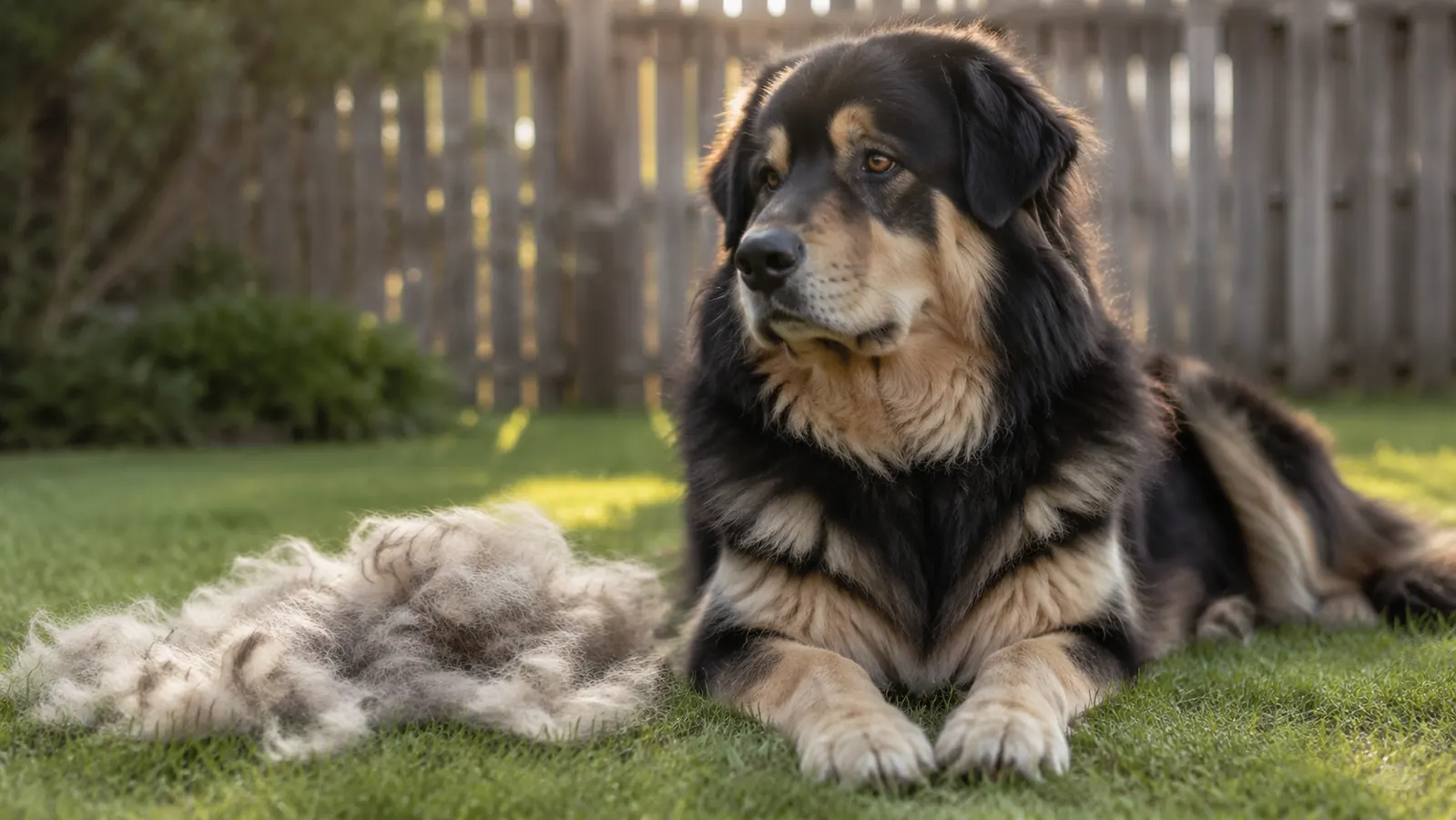
Most of the more than 59,000 ratings on this rake were written right after a single good brushing session. I have spent years on the grooming end of double-coated dogs and long-haired cats, and a lot of what I would tell you does not fit in a star rating. The Maxpower Planet Original Pet Grooming Rake is a genuinely good tool. It is also easier to misuse than almost anything else in my grooming basket, and almost nobody tells you that part.
It is not a magic wand. It will not stop your dog from shedding, it will not fix a coat that is already matted, and if you press too hard it will irritate skin that was perfectly happy ten minutes earlier. Used the right way, it pulls loose undercoat out faster than a slicker brush and puts it in the air instead of on your sofa. The distance between what this rake can do and what people expect it to do is the whole review.
So consider this the read-before-you-click version. I am going to cover the double-sided head and what each side is actually for, how the handle feels after twenty minutes, the gentle-hand rule that keeps it safe on thin skin, and the coats you should not drag this tool across. If your dog fits the tool, you will be glad you bought it. If not, you will be glad you read this first.
The Quick Verdict
An excellent shedding-season tool for double-coated dogs and long-haired cats, provided you accept it needs a light hand, an outdoor spot, and a few fingers to pull hair off the pins. Wrong choice for smooth short coats, sensitive skin, or a coat already in mats.
Amazon Check Today's Price →The rake that ends shedding season, if you use it right
Every detail in this review lands the same place eventually. For its current price this rake does a job a tool two or three times the price only does slightly better. The wide head, the two sides, and the undercoat they lift are worth it for the animals that fit.
Amazon Check Today's Price on Amazon →How I've Used It
I have run this rake through several shedding seasons on more than one double-coated dog and on one long-haired cat. That is not a laboratory test, but it is close enough to real life to see what happens when the routine goes right and what happens when it goes wrong.
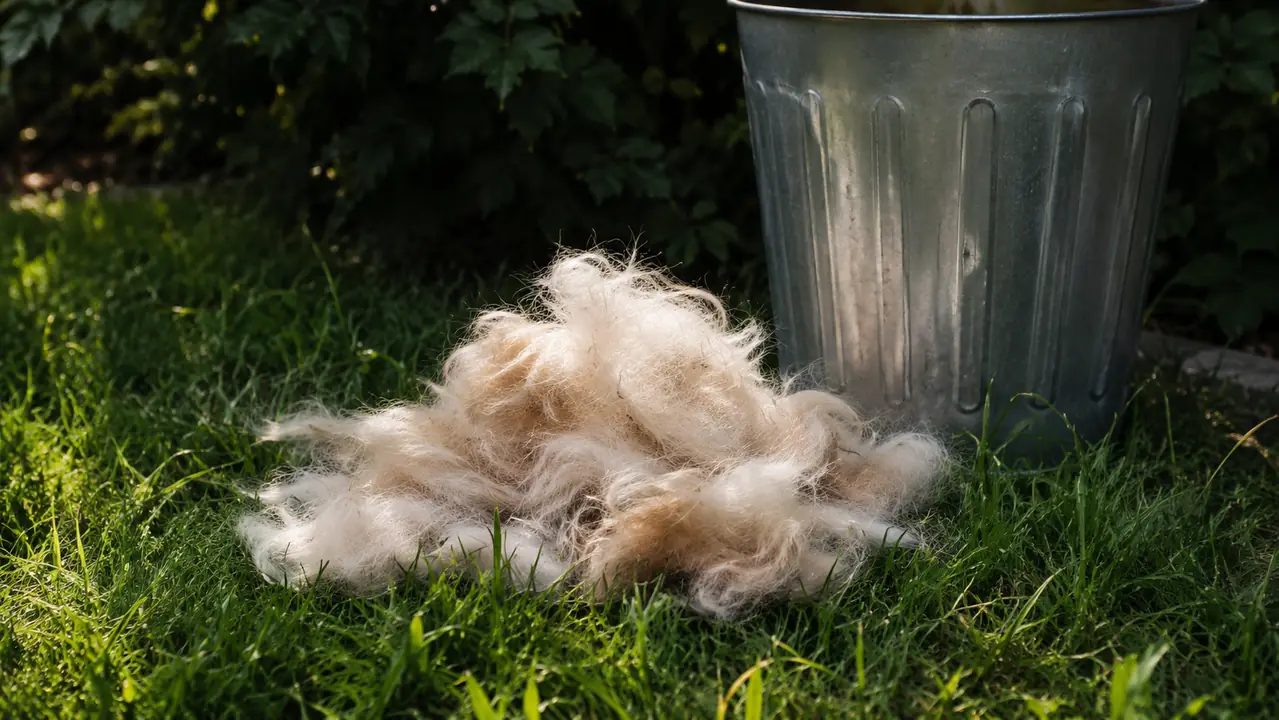
The routine was almost always the same. Two or three passes with the wide-tooth side first to break up the undercoat, then the fine-tooth side to lift what the first pass loosened. Outdoors, over a bin, never in the living room. I learned that lesson the first spring, halfway through a session that greased the kitchen floor with a layer of fur.
I used it on a heavy-shedding dog whose undercoat came off in strips that looked like a second animal, and on a cat that tolerated about four minutes of grooming before walking away. Both animals put less fur on the furniture afterward. The cat put a lot less fur on the furniture, because with a cat the window is short, and the rake works fast within it.
One thing I noticed early: the first time you see an undercoat come off in one piece, your brain does not quite process it. People expect brushing to be a gentle cloud of hair. This rake pulls a visible mat of undercoat off in long strips, and that is the moment the tool either scares you or wins you over. It wins you over, once you see how much of the week's vacuuming it just did for you.
The Double-Sided Head Is Two Different Tools
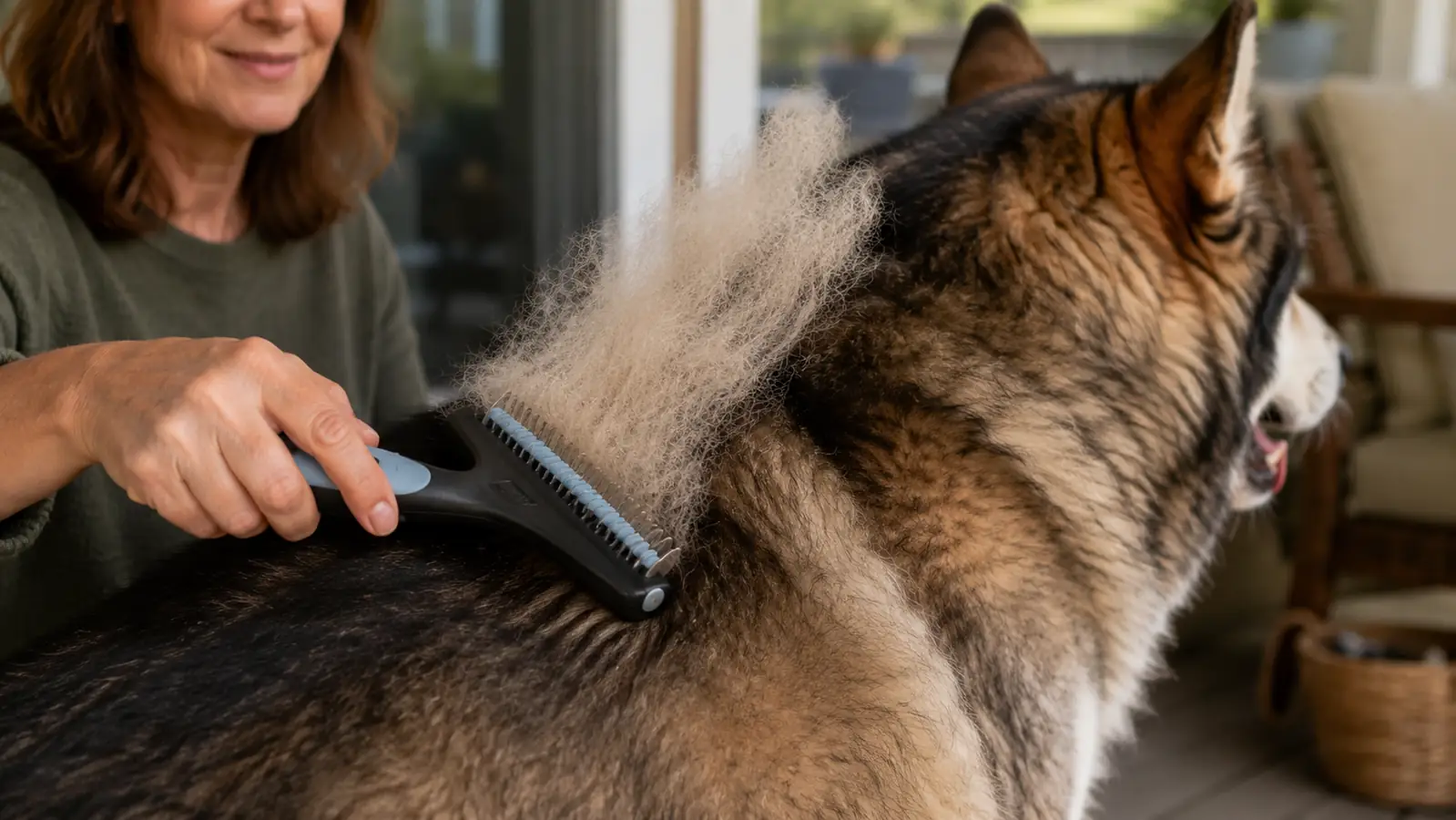
The first thing to understand is that this is not one rake with a convenient flip side. It is two tools sharing a handle. One side has wider-spaced pins built to reach down through the top coat and lift the loose undercoat below it. The other side has fine, closer-set teeth that do the finishing work, collecting the hair the first pass loosened and left behind.
Nobody tells you that you have to pick a side before you start, or that switching sides mid-session without clearing the pins sprays hair in every direction. I got into the habit of lifting the tool clear, pulling the hair off, then flipping it. It is a small rhythm, and the tool behaves much better once you build it.
Match the side to the job. The coarse side is for the first passes on a heavy undercoat, when the goal is breaking up the downy layer and bringing it to the surface. The fine side is for everything after that: the lighter sheds, the finishing pass, the sensitive belly, and any smaller animal. Using the fine side first on a heavy coat just wastes your time.
The two sides are the reason the price makes sense. A slicker brush takes hair off the surface and leaves the undercoat where it is. This rake reaches the layer a slicker never touches, which is the layer that decides how much fur you find on the sofa. As long as you use both sides in the right order, the tool does exactly what it says.
The Grip, After a Real Session
The handle is comfortable for the first ten minutes, and then you start to notice it. It is a wide, padded grip that fits a large hand well. The extra-wide head is the entire point on a big dog's back, but it has no give, so you feel every stroke as a pull on the wrist.
On a long session my hand stayed in one position the whole time. There is no hand rest and no angle adjustment, so the grip is what it is: you hold it and you work. I would stop every few minutes, shake out the hair, and let my hands reset. Is that a dealbreaker? No. Is it worth knowing before you buy? Yes, because a ten-minute dog turns into a thirty-minute project twice a week during shedding season.
The wide head also means you trade reach for control. On a big back, one long stroke covers ground and the loose undercoat comes along in satisfying sheets. Under the legs, around the tail, and along the throat, the wide head is too big to work precisely, and you end up turning the tool sideways and using just a corner of the pins.
On a small dog or a cat the wide head is genuinely awkward. The head is wider than a small animal's back is long, so you spend the session aiming and placing the tool instead of sweeping it. That is a reminder that the Maxpower Planet rake was designed for a big back first, and every other job second.
Sensitive Skin and the Case for a Light Hand
The pins are metal, and they are sharp enough to matter. The rake will not cut skin the way a blade can, but it will scratch and redden if you press, especially over the ribs and the belly where skin is thin and the coat is short. The tool does not need pressure to work. Pressure is how the tool gets misused.
The rule I landed on: never push the rake into the coat. Let the weight of the head do the work. If you have to lean on it to feel progress, you are pressing too hard, and you are about to irritate skin that was fine a minute ago. A dog that flinches, licks at the spot, or tries to walk away is telling you to lighten up, not to try harder. Listen to that signal.
If the skin is already red, irritated, sunburned, or raw, this tool stays in the drawer, and the skin gets looked at by a vet or a professional groomer first. Same rule for a coat with mats. Running a rake over a mat pulls at the skin underneath it, and that is not what this tool is for. A mat needs patience and often scissors; a rake is for maintenance, not rescue.
Once you get used to the light hand, the rake feels nearly effortless, and that is the real skill it teaches you. You are not scrubbing the coat. You are letting the pins glide through a layer of already-loose hair and pulling the whole layer out at once. When it feels that easy, you are finally doing it right.
Two passes with the coarse side, one with the fine side, and the undercoat came off in strips the size of my hand.
The Coats It Isn't Meant For
Here is where the honest review leaves the five-star spread. The rake works on double-coated and medium coats with a real undercoat: shepherd mixes, huskies, spaniels, collies, and long-haired cats. That covers a huge number of households, which is why the ratings pile up so high. But the ratings also include plenty of people who bought it for the wrong animal.
It is not for short, smooth, single coats. A short-coated dog sheds constantly, but there is no undercoat layer to lift, so the rake mostly drags along the surface and collects almost nothing. A rubber grooming mitt does a better job there, for less money and with zero sharpness.
It is also not for coats that are already matted, and not for very curly coats that tangle easily. In both cases the pins pull at the skin before they fix anything. Mats need scissors, clippers, and usually a professional. Get the coat handled first, then use the rake to keep it that way.
And here is the biggest expectation to manage: the rake does not stop shedding. It removes hair that is already loose. The sofa still gets hair, just less of it, and the vacuum still gets used. Expect a hair-free house and you will be disappointed. Expect noticeably less hair, and you will be exactly as happy as you should be.
One more coat fact worth knowing: there are dogs whose undercoat is seasonal and dogs whose undercoat turns over nearly all year. On the seasonals, the rake shines for about six weeks around the change of seasons and then sits idle, which surprises people. On the year-round shedders, it earns its place in the grooming drawer permanently.
How It Stacks Up Against the Alternatives
Compared with the slicker brush and the rubber mitt you probably already own, the rake's job is different. The slicker pulls loose surface hair. The mitt is great for short coats and for animals who hate being brushed. Neither one reaches an undercoat, and the undercoat is the part that ends up in the corners and under the sofa.
Against the big-name deshedding tool, the honest math favors the Maxpower Planet rake at its current price. The name brand has a spring-loaded release button that ejects the hair cleanly, which is genuinely nicer in the middle of a session. It also sells a blade edge that some animals tolerate less well than a row of pins.
You pay two or three times as much for the name brand, and it removes a similar amount of undercoat when you use it the same way. The real differences are the eject button, the handle feel, and the blade. On an animal who has never had a deshedding tool near them, the pins usually tangle less and buy you more patience.
That is the part the reviews never tell you: the tool you pick matters less than the animal you use it on and the hand you use it with. A calm dog, a light touch, and an outdoor spot do more for your shedding problem than any specific brand. The rake just happens to do it for the least money.
What I Liked
- Pulls out undercoat a slicker brush never reaches
- Two sides act as two separate tools
- Extra-wide head clears a big back in a few strokes
- Simple and durable, nothing to break or wear out
- Low price next to the big-name deshedders
Where It Falls Short
- Metal pins demand a light hand on thin skin
- No hair-eject button, so you pull hair off by hand
- Wide head is awkward on small dogs and cats
- Wrong tool for short coats, mats, and curly coats
- Handle has no rest and no angle adjustment
Who This Is For
If you share a house with a double-coated dog or a long-haired cat, and shedding season has you vacuuming every single day, this rake is for you. You will set aside ten minutes outside once or twice a week while the undercoat is turning, accept that some hair still lands on the sofa, and watch your vacuums last longer. It is a maintenance tool for a specific kind of coat, and for that coat it is excellent.
It is also for people willing to read the tool instead of forcing it. The animal sets the pace. You start with short sessions, you go with the coat, not against it, and you stop the moment the pins are empty rather than chasing more. If you can work that way, the rake pays for itself in the first season.
Who Should Skip It
Skip it if your dog has a short single coat that just sheds, because there is nothing here to rake. Skip it if the coat already has mats, because the pins will pull skin before they fix hair. Skip it if your animal's skin is sensitive or already irritated, because the correct move there is a vet, not a tool.
Skip it if you are not willing to groom outdoors, because loose hair travels. Skip it if you want a tool you can sweep across the top of a coat and walk away from. And if the animal hates brushing no matter what tool you use, start with treats and short sessions before you spend anything on the rake, or the rake will just be the third brush the dog hides from.
The honest bottom line
For double-coated dogs and long-haired cats, the Maxpower Planet rake is one of the best low-cost grooming buys there is, provided you use the right side, a light hand, and an outdoor spot. Check today's price, compare it with the tool you already own, and decide whether your animal fits the tool.
Amazon Check Today's Price on Amazon →