
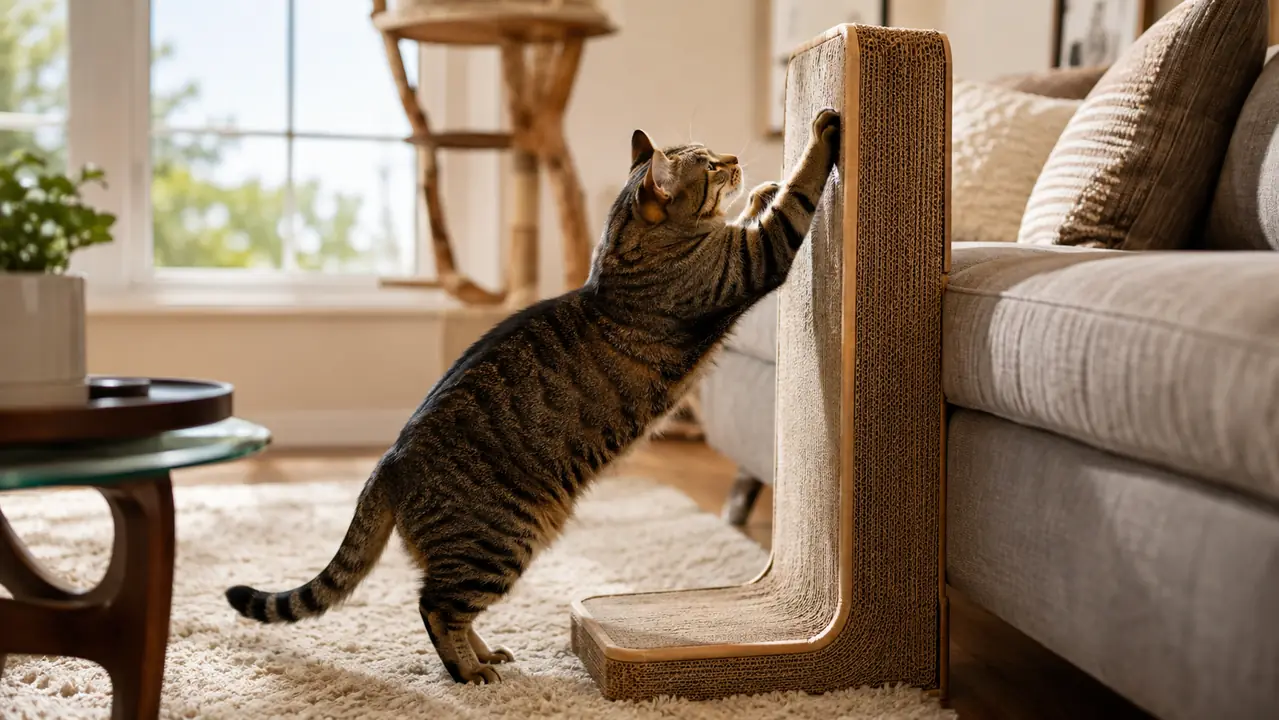
Every cat owner knows the moment you catch the cat mid-scratch on the arm of the sofa, looking at you with the mildest expression of being caught. You tell it no, it waits until you leave, and the damage keeps appearing no matter how often you redirect. If you have lived through a cat that insists on scratching vertical surfaces, you have probably wondered whether an actual scratching post is worth the money, or whether the cat will just ignore it. I have spent three months with the FUKUMARU L-shaped cat scratcher next to a couch that used to be the cat's favourite target, and it has held up longer and worked harder than any new sofa cover I have tried.
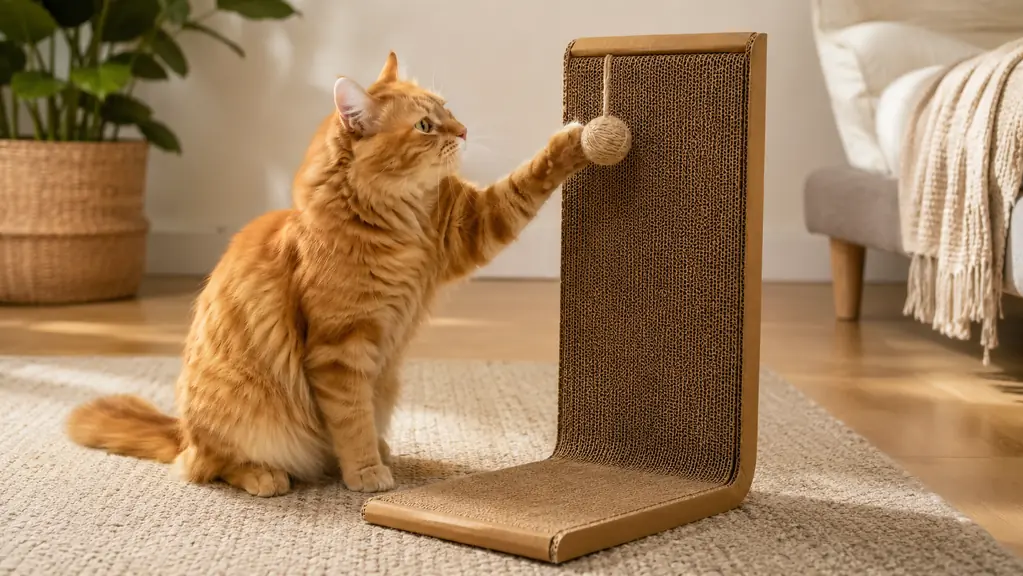
The FUKUMARU is a 26.8 inch L-shaped board of dense sisal cardboard, a tall vertical panel attached to a low horizontal base, with a little ball hanging from the top of the vertical section. The whole thing sits against a wall and gives a cat two things most indoor cats want: a tall, sturdy surface to stretch up and scratch, and a low base to sink claws into. The ball is there to draw the attention of a cat that needs an invitation. It is a simple, cardboard-based design, and in the years I have spent around cats and dogs, simple usually beats clever when a cat has decided what it wants to scratch.
The Quick Verdict
A tall, stable L-shaped cardboard scratcher that the cat actually used, every day, for three months, and the sofa stayed untouched the whole time. It is not furniture-proof forever against the most determined cat, and it will eventually need replacing, but for redirecting a vertical scratcher it is one of the best things I have tried.
Amazon Check Today's Price →Point the scratching where you want it
If your cat scratches the sofa arm or the corner of a chair and ignores flat pads, the tall vertical panel on this FUKUMARU L-shaped board is what matches that habit. Three months in, mine has used it daily and left the couch alone. Worth checking today's price if the furniture is losing the war.
Amazon Check Today's Price on Amazon →How I've Used It
For twelve weeks I kept the FUKUMARU L-shaped scratcher placed against the wall right next to the sofa arm that a very motivated indoor cat had been shredding on and off. I did not do anything fussy with it. I set the board where the scratch mark already was, because the cat had told me exactly which surface it wanted, and I left the little ball hanging at the top to do the inviting. I tracked how often the cat used it, which part it favoured, and how the cardboard wore down over three months of daily scratching.
The first week was the telling one. I expected the cat to sniff the board, maybe scratch it once out of curiosity, and go back to the sofa. Instead, within a day it was raking the vertical panel with both front paws, stretched up the way cats like to scratch a tall surface, and the hanging ball got played with every morning. The cat chose the board because it sits where the old scratch spot was, and a good scratch surface that a cat reaches for on its own is everything. No treats, no training, no coaxing. Placement did the work.
The real test was durability, because cardboard is cardboard and cheap cardboard scratchers collapse into a pile of shreds within weeks. I watched this one for signs of that through the whole three months. The vertical panel developed the expected frayed, textured surface from repeated clawing, which is normal and part of why cats like it, but the board never bowed, split, or fell apart. By the end of the test the cat still used it every day, and the sofa still had the same one old mark it had before the board arrived. That is the outcome that matters.
Why the L-Shape and the Height Matter
The shape is the part that does the real work, and it is why this has performed better than the flat scratch pads I have tried over the years. A flat pad gives a cat something to shred, but many cats, especially the ones that go after vertical furniture, want to stretch their whole body up and dig claws into a tall surface. The 26.8 inch vertical panel on the FUKUMARU gives a cat room to do that full-body stretch, and that is exactly the motion a cat uses on a sofa arm or a chair back. When you match the height and angle, the cat does not need to be trained, it recognizes the surface as the thing it already wanted.
The low horizontal base matters just as much, and for a reason that is easy to overlook. A tall scratching post only works if it stays put. If the board wobbles or slides when the cat rakes it, most cats get startled and stop using it, and the furniture wins. This FUKUMARU sits on a wide, low base that kept it planted on the floor the entire three months, even under the full force of a cat throwing its weight into a full stretch. The cat never once hesitated because the board moved, and that stability is the quiet reason it became a daily habit instead of a novelty.
The hanging ball is a small thing in the spec sheet, but it turned out to be more than decoration. A cat that is not immediately interested in a new scratch surface often needs an invitation, and the ball dangling at the top of the board gave mine a reason to stand up against the panel and start pawing. In the years I have spent around cats and dogs, that little bit of motion is what flips a cat from ignoring a new object to investigating it. Once the cat was up there batting at the ball, the scratch surface was right there, and the habit formed on its own.
The cat stretched up, raked the tall panel with both front paws, and never once went back to the sofa. Placement against the old scratch mark did more than any training session ever had.
How the Cardboard Held Up Over Three Months
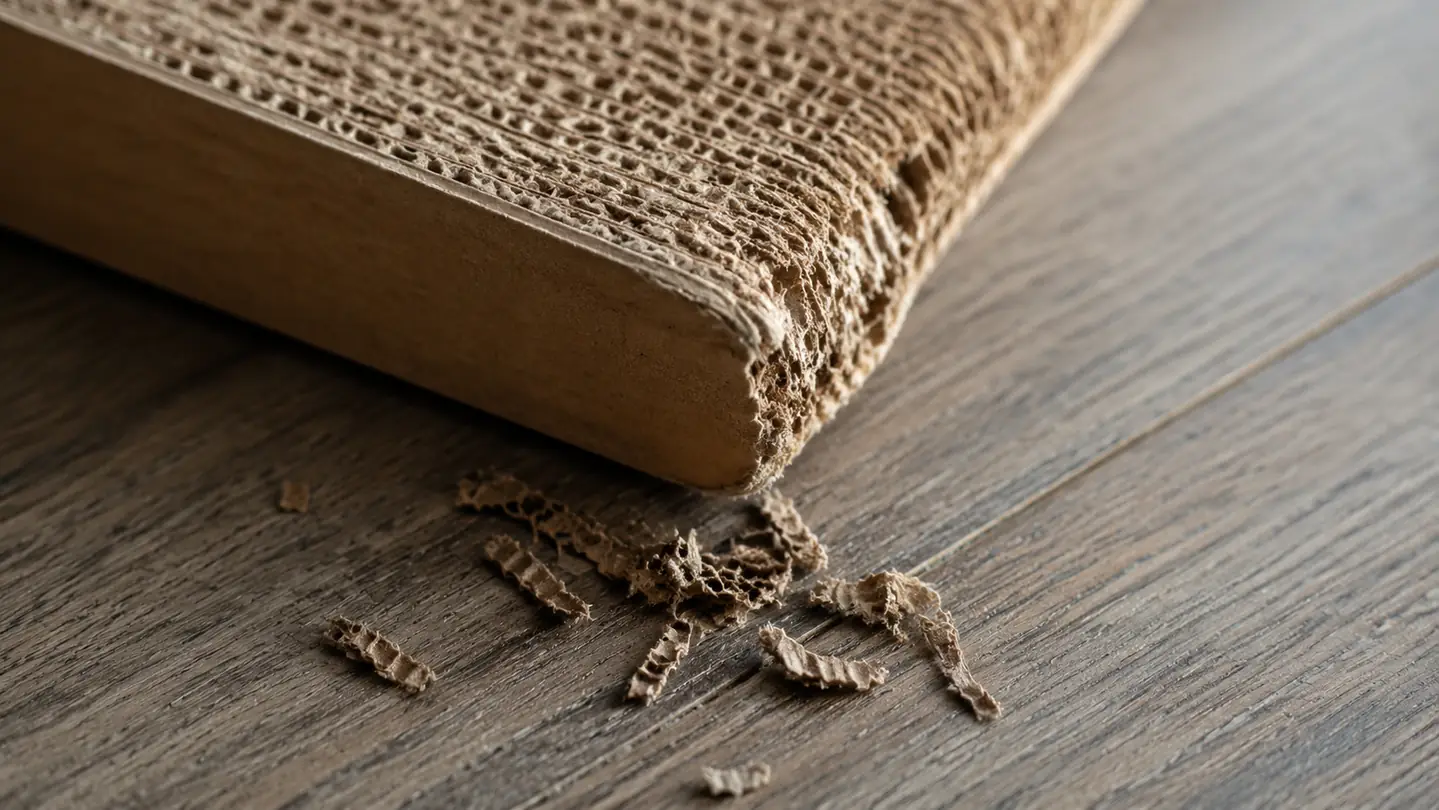
Cardboard wear is the honest weak spot of any scratcher in this price range, so I kept a close eye on it. What I found surprised me in a good way. The dense sisal cardboard does not shred the way the cheap corrugated pads do. After a month the surface was dusted with the normal light powder that any scratched-up cardboard sheds, and the panel had taken on the textured, slightly raised look of a well-used board. But there were no big chunks missing, no collapsed panels, and no cardboard crumbs scattered on the floor beyond a few shreds under the base.
At the two month mark the surface was worn smoother in the middle of the vertical panel, where the cat's claws landed every day, but the board was still structurally solid and the cat still preferred it to anything else in the room. That is the difference between a real sisal cardboard board and a flimsy scratch pad: it wears down slowly and evenly instead of breaking apart under a few weeks of use. If the cat scratches in one exact spot daily, the way many cats do, that one area will smooth out faster than the rest, and that is normal and expected rather than a defect.
After the full three months the panel had a well-worn centre and a slightly frayed corner from when the cat dug in at the base, but the board was still fully usable and still getting used. I would not pretend it lasts forever, because cardboard is consumable by design and the day will come when a dedicated cat wears the middle right through. But for a cat that scratched daily, three months of solid use with the furniture untouched is far better value than the sofa arm it was protecting, and swapping in a fresh board when that day comes is cheap.
The Honest Limits
Let me be straight about the limits, because no review that does not mention them is worth reading. The biggest is that this is cardboard, and cardboard is not forever. A very determined cat that scratches one spot for hours every day will eventually wear a hole through it, and you will need a new board down the road. That is the cost of a cardboard surface that a cat actually prefers, and it is why this type of scratcher is priced the way it is rather than priced like furniture that lasts a decade.
Second, the little ball is the most fragile part. It hangs at the top of the board, and a cat that plays rough with it can pull it off or bend the attachment over time. Mine never did, but the reviews that mention the ball coming loose are describing a real possibility rather than a rare fluke. It is not load bearing in any way, the board works fine if it comes off, but if your cat treats the ball as a wrestling toy, set the expectation that it may not stay attached forever.
And third, the L-shape is built for a cat that wants to scratch vertically. It will not satisfy every cat. A cat that prefers to scratch a flat horizontal surface, or a cat that only scratches for territory marking at a particular door frame, may not take to it, and no cardboard board fixes a cat that has decided on something else. If your sofa is already shredded to the frame, a single board will not undo the habit overnight, and the furniture may still need protection while the new habit takes hold.
What I Liked
- Tall vertical panel matches the full-body stretch that drives sofa and chair scratching
- Wide, stable base never slid or wobbled, so the cat trusted it and kept using it
- Hanging ball gave a hesitant cat a reason to investigate and start a habit
- Dense sisal cardboard wore down slowly and evenly over three months without collapsing
- Placement next to the old scratch spot meant no training was needed
Where It Falls Short
- Cardboard is consumable and will eventually need replacing under a very determined cat
- The hanging ball is the most fragile part and can come loose with rough play
- Only suits a cat that wants vertical scratching, not every cat's preference
- Won't undo a deeply entrenched furniture habit on its own
How It Compares to the Alternatives
The two common alternatives are a carpet-covered vertical post and a flat corrugated cardboard pad, and the FUKUMARU sits between them in a useful spot. A carpet post gives the same tall stretch, but many cats develop a preference for cardboard's texture and will abandon a carpet post for a cardboard box the second one appears. The FUKUMARU leans into the cardboard preference while adding the tall vertical panel that a flat pad lacks. It is the middle ground that matched how this particular cat actually scratches.
The flat cardboard pads I have used in the past were cheaper and fine for a casual scratcher, but they sat on the floor and never gave the cat the full-body stretch it wanted, so they got used far less and the furniture kept taking hits. The FUKUMARU's tall panel solved that specific gap. I compared it directly against another well-reviewed L-shaped cardboard board in a separate article, and the short version is that the FUKUMARU won on stability and board density, the two things a daily-scratching cat actually tests.
The cat chose the board because it sat where the old scratch spot was. No treats, no training. Placement did the work, and the couch has not taken a single new mark in three months.
Who This Is For
This scratcher is for anyone whose cat scratches vertical furniture, the sofa arm, a chair back, or the side of a doorway, and who wants to point that behaviour somewhere appropriate instead of fighting it. If your cat already scratches the couch, place the board against the same spot and you are giving it the identical stretch and surface it was already looking for. It is also a strong pick for a single cat or a household that wants something lightweight and easy to move around to find the spot the cat loves, rather than a heavy piece of furniture that stays where you put it.
Who Should Skip It
Skip it if your cat only ever scratches flat horizontal surfaces, because this board is shaped for vertical scratching and a floor-only scratcher will not use it. Skip it if you want a permanent, furniture-grade piece that never needs replacing, because this is cardboard and it wears out on purpose. And if your cat starts scratching more than usual, stops using the litter box, or behaves out of character, that can point at stress or something medical rather than a missing toy, and a scratch board is not a treatment for any of that. If you are worried about a change in your cat's scratching or behaviour, bring it up with a vet rather than assuming a new board will fix it.
The Bottom Line After Three Months
If I had to sum up twelve weeks with the FUKUMARU L-shaped cat scratcher in one sentence, it is this: it did the one job a scratcher is supposed to do, it did it every day without any training, and the sofa is exactly as damaged as it was the day the board arrived, which is to say it stopped getting worse the moment I placed it. The tall panel gave the cat the stretch it wanted, the stable base kept it coming back, and the sisal cardboard wore down the way it should instead of falling apart.
What I keep coming back to, after years of trying to keep furniture safe from well-meaning indoor cats, is how little effort this took. I did not have to train the cat, tape things to the couch, or scold it for months. I put the board where the cat was already scratching, the ball drew it up, and the habit switched on its own. The whole machine is a cardboard board with a ball, and that is exactly why it works. Simpler than any plan involving sprays or covers, and it actually got used.
The caveats are real and worth repeating. It is cardboard, so a very determined cat will eventually wear it through and you will buy a replacement. The ball can work loose with rough play. And it only speaks to a cat that wants to scratch vertically, so it is not a cure for every furniture habit. But for the common case of a vertical-scratching indoor cat, the FUKUMARU is about as close to a sure thing as this category offers. Check today's price on Amazon, put it against the furniture your cat already targets, and give the box one more chance before you give it to the trash.
Three months in, the furniture still has its one old mark
After twelve weeks of daily use, the FUKUMARU L-shaped cardboard scratcher earned its space next to the sofa. If your cat scratches vertical furniture, it is worth checking the current price on Amazon and letting the tall panel do the work from day one.
Amazon Check Today's Price on Amazon →