
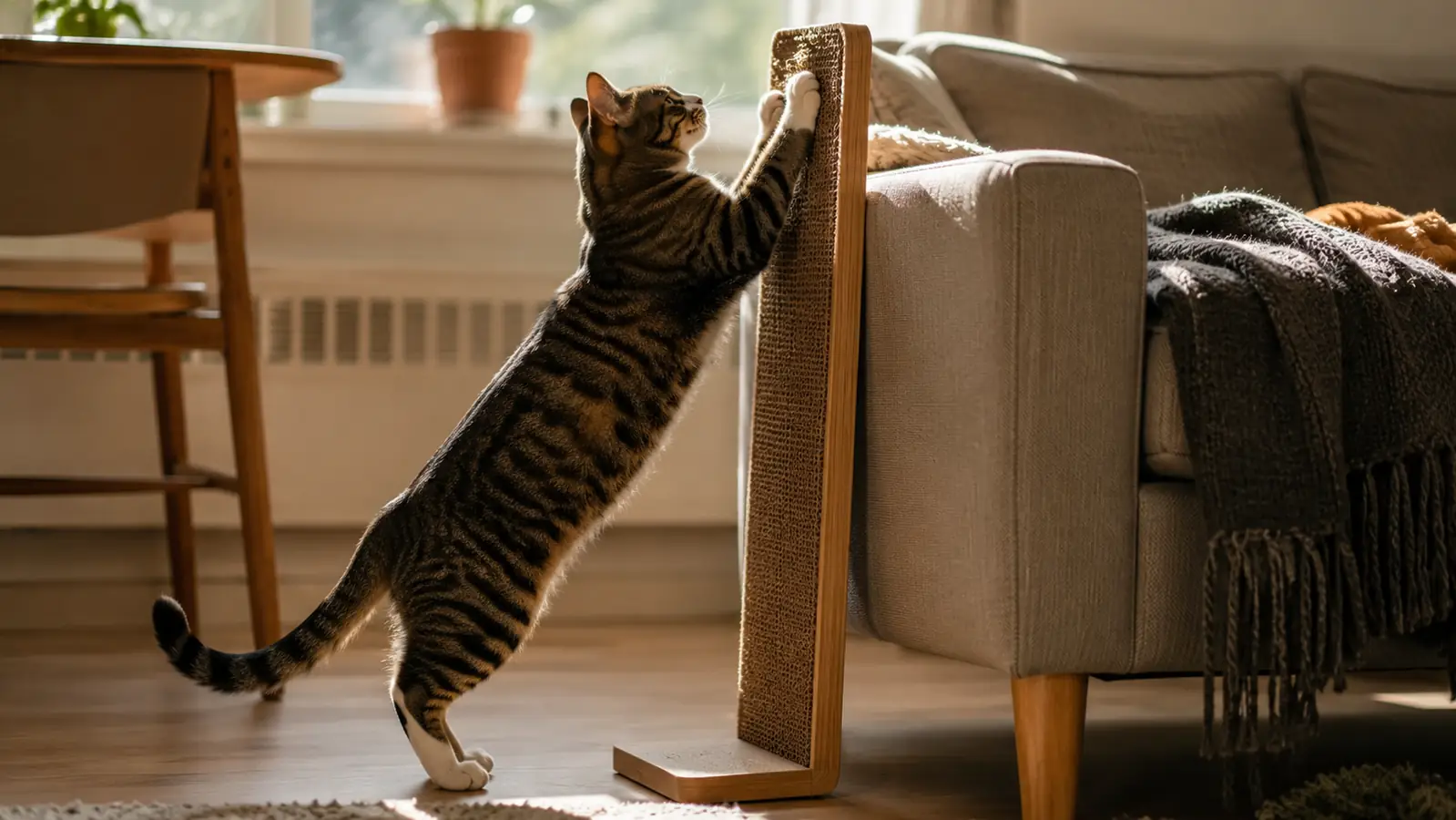
Sticking with the FUKUMARU L-shaped cardboard scratch pad was what finally saved the couch. The arm of the sofa looked like shredded wheat. Close to the seam the fabric had pulled into loose grey threads, and every morning a few more had shed onto the cushion underneath. It was not a destructive cat. It was a cat doing exactly what cats do, and me not giving it a surface that beat the furniture.
I tried the obvious things first. A short scratching post in the corner went completely untouched. I sprayed the sofa with a bitter deterrent, which the cat read as a mild personal invitation. I tried interrupting the behavior, which just taught me that you cannot win a staring contest against a cat who is determined. The sofa kept losing.
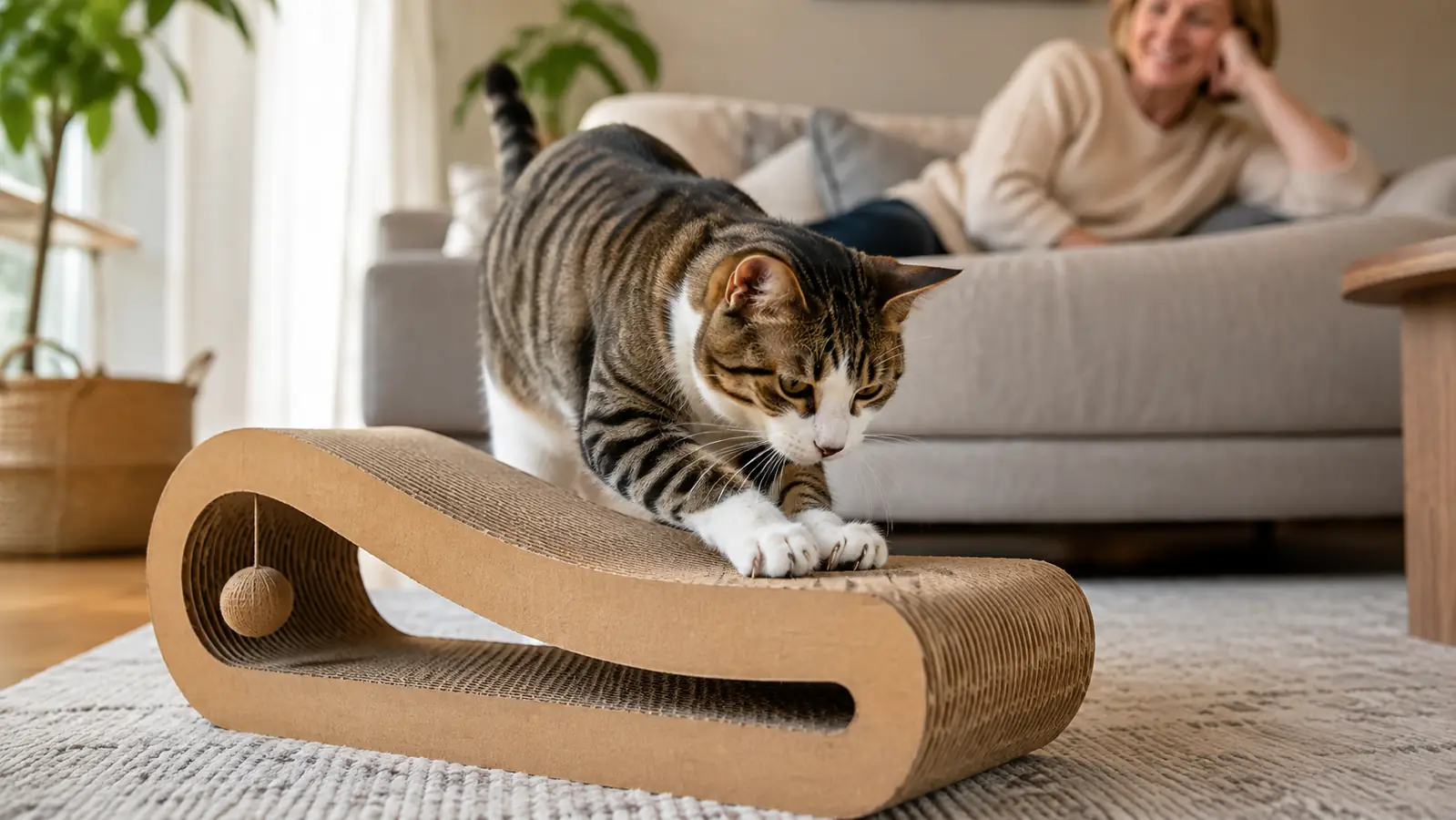
The turning point was a cheap L-shaped cardboard scratch pad with a ball hanging off the side. It arrived flat and unfolded in seconds. I set it at the end of the couch, right where the arm met the cushion, because that is where the scratching was already happening. That placement mattered more than the price tag, and I still think it is the whole trick.
The placement mattered more than the price tag. Put the scratch surface exactly where the cat already scratches and half the job is done.
The scratch pad that took the sofa out of the equation
An L-shaped cardboard pad with a dangling ball, set beside the spot your cat already uses. It is cheaper than a single sofa repair and it does the one thing the furniture cannot. This is the FUKUMARU L-shaped pad I ended up keeping in place.
Amazon Check Today's Price on Amazon →The first day was not encouraging. The cat walked past it twice, then sat on the other arm and stared at me as if I had rearranged the furniture just to confuse it. I dangled the hanging ball so it bounced off the cardboard, and that was the thing that broke the standoff. Cats read movement first and texture second. Once the ball moved, the scratching followed.
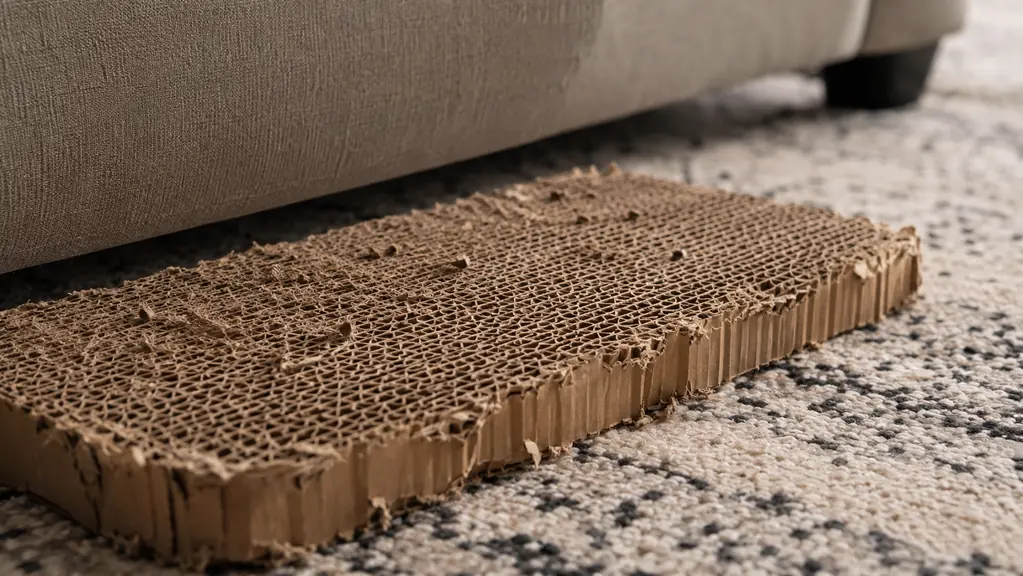
Within a week it was routine. Scratch in the morning, scratch again late in the afternoon, always on the pad. The cardboard develops a soft, frayed surface in the spots a cat uses most, and cats seem to prefer that worn texture to the factory-fresh one. The pile of loose thread on the sofa cushion stopped growing entirely, which was the only measurement I actually cared about.
The honest part: a cardboard pad is a wear item. It is made to be shredded, so a determined cat will eventually chew it down to a soft crumpled shell, and that is the one thing the reviews never shout about. You replace it when the frame goes soft or the edges crumble, the same way you retire worn litter equipment. That is the entire cost of the setup, and it is a rounding error next to a sofa.
If your cat is currently bouncing off one corner of the house and hammering it, I would skip the tall carpet-covered towers with the hanging toys for a moment and try a flat cardboard pad set beside that exact corner. It is cheaper, easier to slide around until you find the winning spot, and cats reliably prefer a generous scratchable surface to a post they have to wrap themselves around. The FUKUMARU one stayed because it was big enough to actually stretch on and stable enough not to slide when the cat threw itself at it.
What I'd Tell You If We Were Sitting at My Kitchen Table
The years I've spent around cats and dogs have taught me one thing about this kind of problem: you are not going to stop the behavior, so stop fighting it and give it somewhere to go. Find the exact spot the scratching happens, park a good scratch surface right next to it, and dangle something that moves to get the first scratch started. If the sofa is the real problem for good, ask your vet or a cat behavior person about it. But for most of us, a twenty-dollar cardboard pad ends the war in a week. It saved our sofa, and it did not take anything clever, just the right surface in the right place.
For the first couple of weeks the pad was more novelty than fix. The cat batted at the hanging ball, sniffed the cardboard, and still gave the sofa a few exploratory passes, as if testing whether the old spot still paid off. I kept the pad in front of the ruined arm and carried the cat over whenever it started to rake the fabric. This is the part nobody warns you about: a scratch redirect takes patience longer than you expect, and then it clicks.
Scent is the underrated half of the job. A cat scratching marks the spot as its own, so the pad needed to collect the cat's own scent before it started to mean anything. A few sessions in, the cardboard held that familiar smell and the sofa lost its appeal. Watch a cat sleep, stretch, and pad over to the nearest tall rough surface the moment it wakes, and you will understand why the placement next to the sleeping spot did more than any scolding ever could.
The pad that sits where your cat already scratches
Worn-in surface, a ball that moves, and a footprint that slides anywhere. If your armrest looks like shredded wheat, this is the twenty-dollar fix worth trying before the sofa pays the price. That is the FUKUMARU L-shaped pad from this story, checked against today's price on Amazon.
Amazon Check Today's Price on Amazon →