
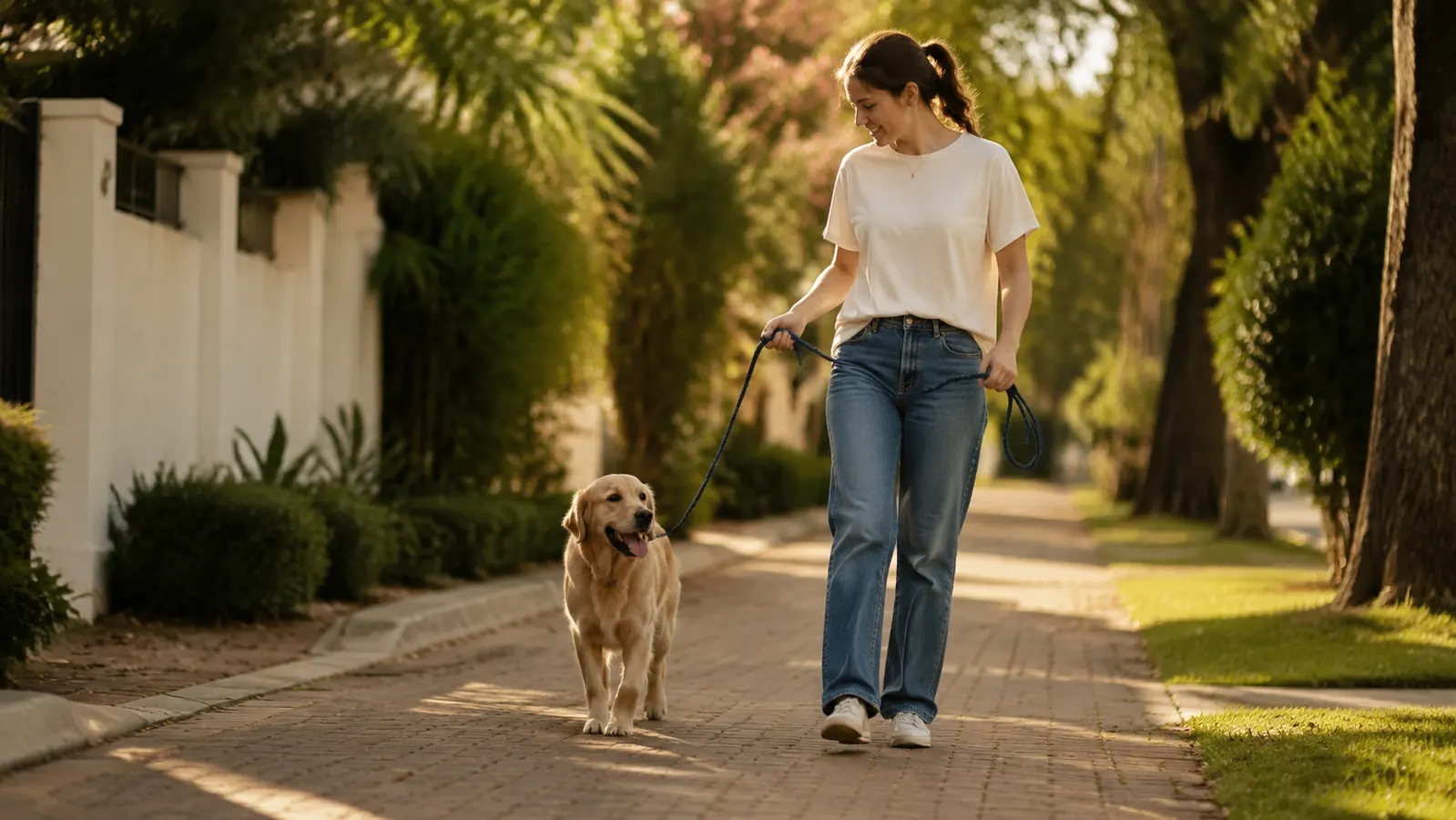
If you have ever walked a strong puller, you know the routine. You brace, they lunge, you spend the whole block with your arm locked and your neck craned. The walk stops being time with the dog and turns into an arm-wrestling match you both lose. Over the years I have spent around dogs and cats, the single cheapest fix for that daily struggle has been a no-pull harness with a front clip, and I do not say that lightly.
A harness is not a shortcut around training. No piece of gear replaces teaching a loose leash, and I would say the same thing about a rabbitgoo as I would about any brand. But the right harness removes the physical fight so the training has room to actually happen. Here are the ten reasons I reach for one, and the honest limits you should know before you buy.
The front-clip harness I keep going back to
For most pullers, the rabbitgoo no-pull harness with two clips is where I tell people to start. It puts the steering up front, pads the chest, and costs about the same as a decent collar. But you already know I like it, so check the current price and decide with your own eyes.
Amazon Check Today's Price on Amazon →The front clip stops pulling at the source
This is the whole point. With a collar, a leash attached behind the head lets a dog lean forward and pull all day. A front-clip harness attaches the leash on the chest, so the moment a dog surges, the harness turns them sideways toward you. It interrupts the pull instead of fighting it head on.
It protects the throat from every lunge
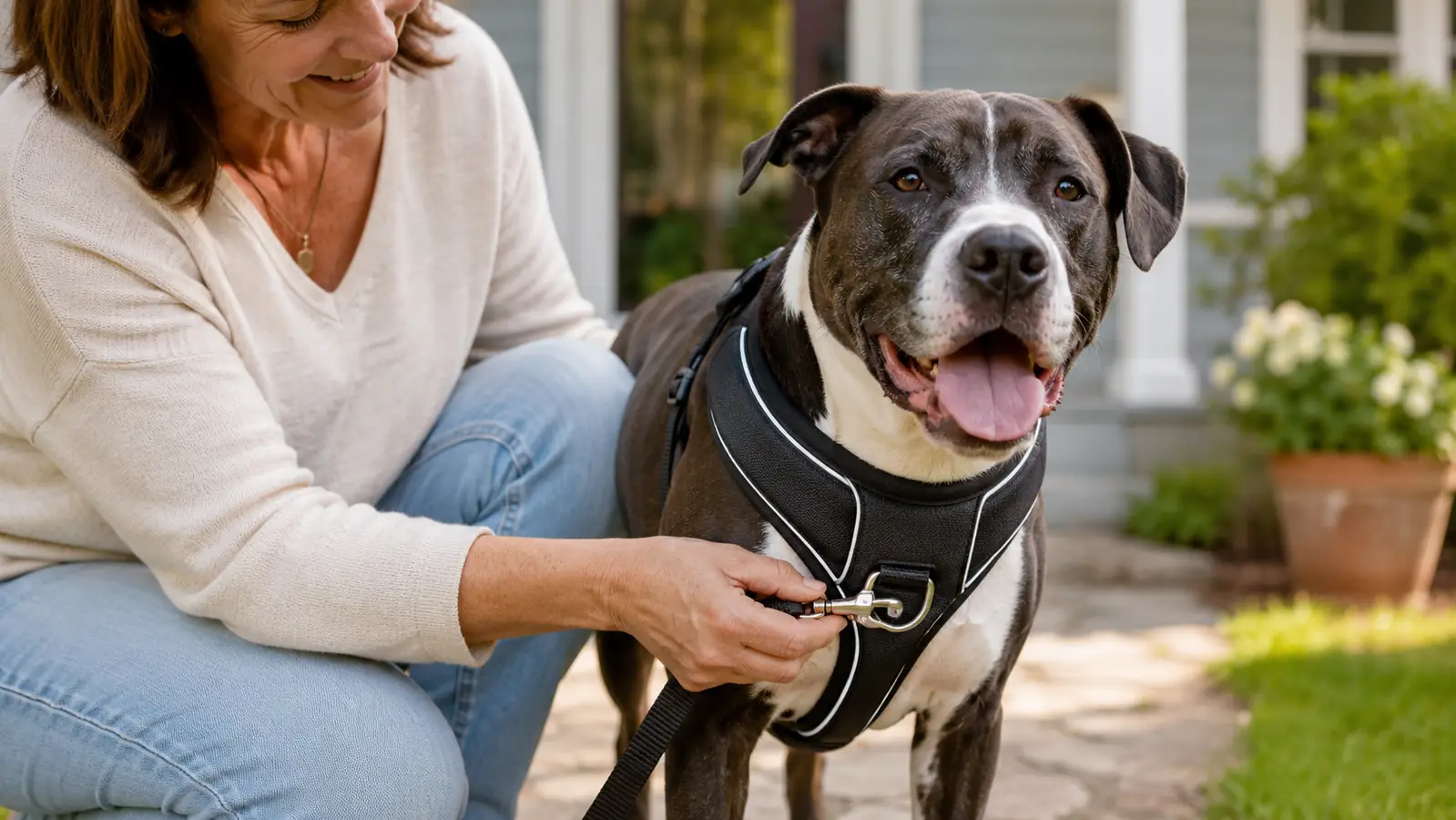
A collar takes the full force of a lunge right at the neck, and that is a lot of repeated pressure on a dog that pulls hard. A harness spreads that same force across the broad chest and shoulders. The mechanical benefit is real, even if I do not oversell what it means for a healthy dog.
It steers, so you are not just holding on
With a front clip you can guide a dog off a curb or away from another dog with a small turn of the leash, not a haul. That steering is what makes walks feel less like resistance training and more like actually walking somewhere together.
Two clips give you a choice every single walk
A front clip for training and a back clip for when the dog is calm and you just want to stroll. That flexibility is why I like a two-clip harness over a front-only one. On an easy morning walk, clip to the back. When you need to work on pulling, flip to the front. Same harness, two jobs.
Padding makes longer walks actually comfortable
A puller spends the first part of the walk charging, and a thin strap digging into the chest the whole time makes that worse. A padded, soft version spreads the pressure and stays comfortable for a mile or two instead of only around the block. Comfort is not a luxury when the walk is the day's longest shared event.
Reflective trim earns its keep in low light
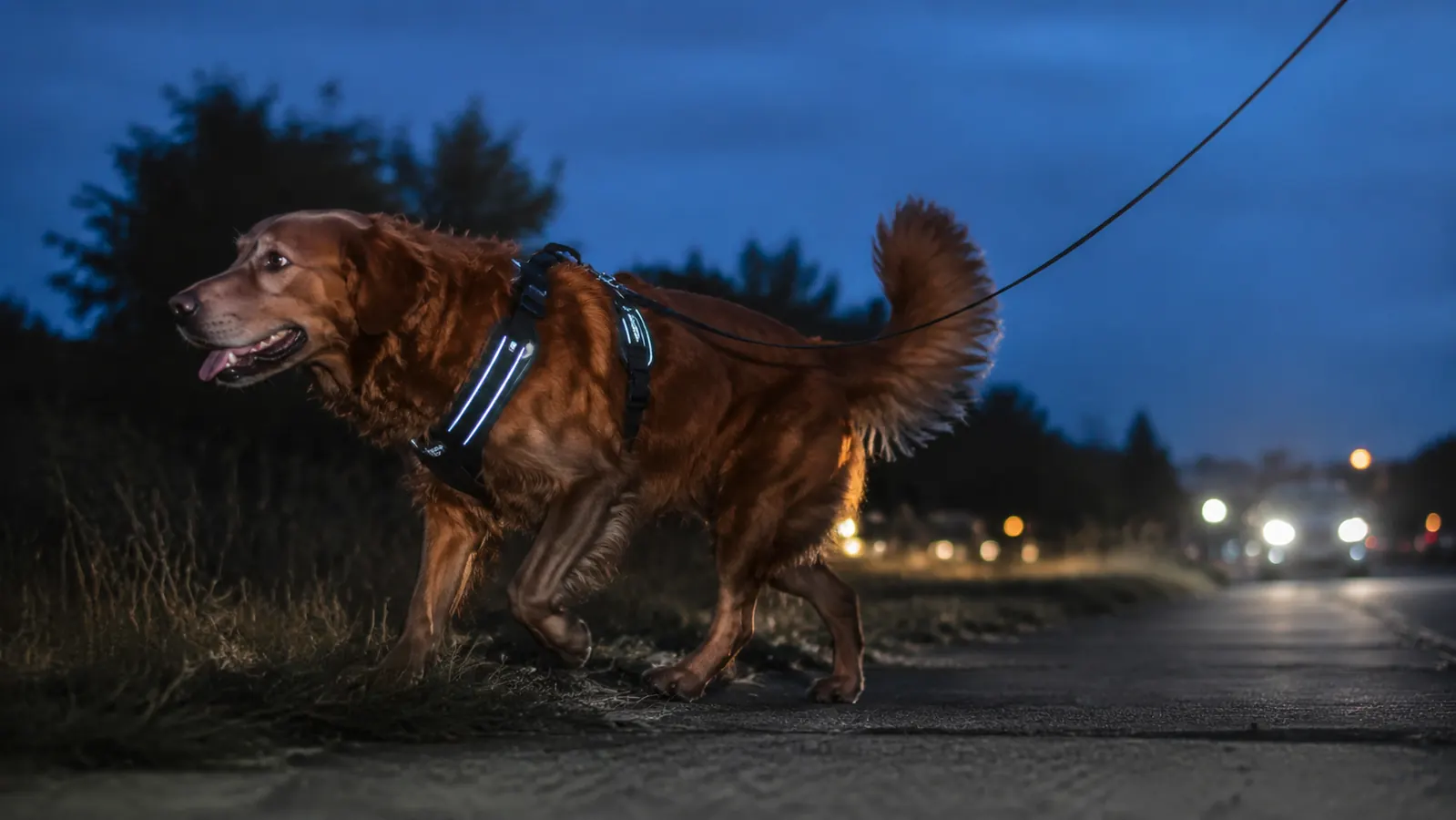
If your walks happen early or late, a harness with reflective stitching makes the dog visible from farther away than a dark coat ever would. On an October evening that is not a marketing feature, it is the difference between being seen and not. I will take any extra margin there I can get.
A handle gives you a quick grab, not a scramble
A top handle is the detail you do not miss until you need it once. Crossing a busy street or passing a dog that has gone stiff, you grab the handle instead of fumbling with the leash. It is one small strap that quietly makes a lot of situations less stressful.
An adjustable fit matches the dog you have
No two dogs share a build, and a strong puller comes in every size and shape. A harness with adjustable straps lets you fit the girth and the shoulders to the actual dog. A snug, even fit is half the reason the front clip works at all.
It goes on faster than you expect
I was skeptical the first time, because some harnesses are a puzzle of straps and buckles. A step-in or slip-over design clicks on in seconds once you have the sizing right. On a cold morning when you just want out the door, that ease matters more than it sounds.
It makes the training you do actually stick
Here is the honest part. The harness does the physical work, but the lasting change comes from rewarding a loose leash and stopping when they pull. Because the harness takes the brute force out of the equation, you can finally practice that without your arm giving out first. The gear buys you the patience to train.
What I'd Skip
I would skip a no-pull harness for a dog that already walks quietly on a loose leash, because you are carrying extra straps for no reason. I would also skip treating the harness as the whole answer. If a dog still lunges and pulls hard after weeks of consistent front-clip use and reward-based training, that is the point to bring in a professional trainer, not to buy a bigger, tighter harness.
The harness does not train the dog for you. It takes the arm-wrestling out of the walk so you can finally do the training instead of surviving the walk.
The one question everyone asks before switching is whether the harness will rub or chafe, and it is worth taking seriously, because a harness you dislike is a harness you stop using. A padded no-pull design spreads the load across the chest and the girth instead of dumping it all on one strap. On the dogs I have fitted the difference shows up on the longest walks: no chafing behind the front legs, no digging into the shoulders, and a dog that walks with its head up instead of braced against the collar.
Fitting matters more than any label on the box. A no-pull harness only works if it sits right, with the front clip high on the chest and the girth band snug without being tight. You should be able to slip two fingers under any strap. A too-big harness lets the dog plant its feet and pull anyway, and a too-small one makes a dog resent the whole idea. Take the extra minute to adjust it correctly the first time.
Give it a few real walks before you judge it. The first outing is often a little odd while the dog learns that slack on the leash means it can move freely and that pressure comes from pulling forward. By the third walk most dogs have the idea. When a walk stops being a tug of war it stops feeling like a chore, and you start taking the longer route just because you can.
Give your walks a fighting chance
A front-clip harness is the cheapest thing I have found that turns a daily struggle into something closer to a calm walk. The rabbitgoo is the one I keep recommending, and it works with the training you are already doing. Check today's price and see if it fits the dog in front of you.
Amazon Check Today's Price on Amazon →