
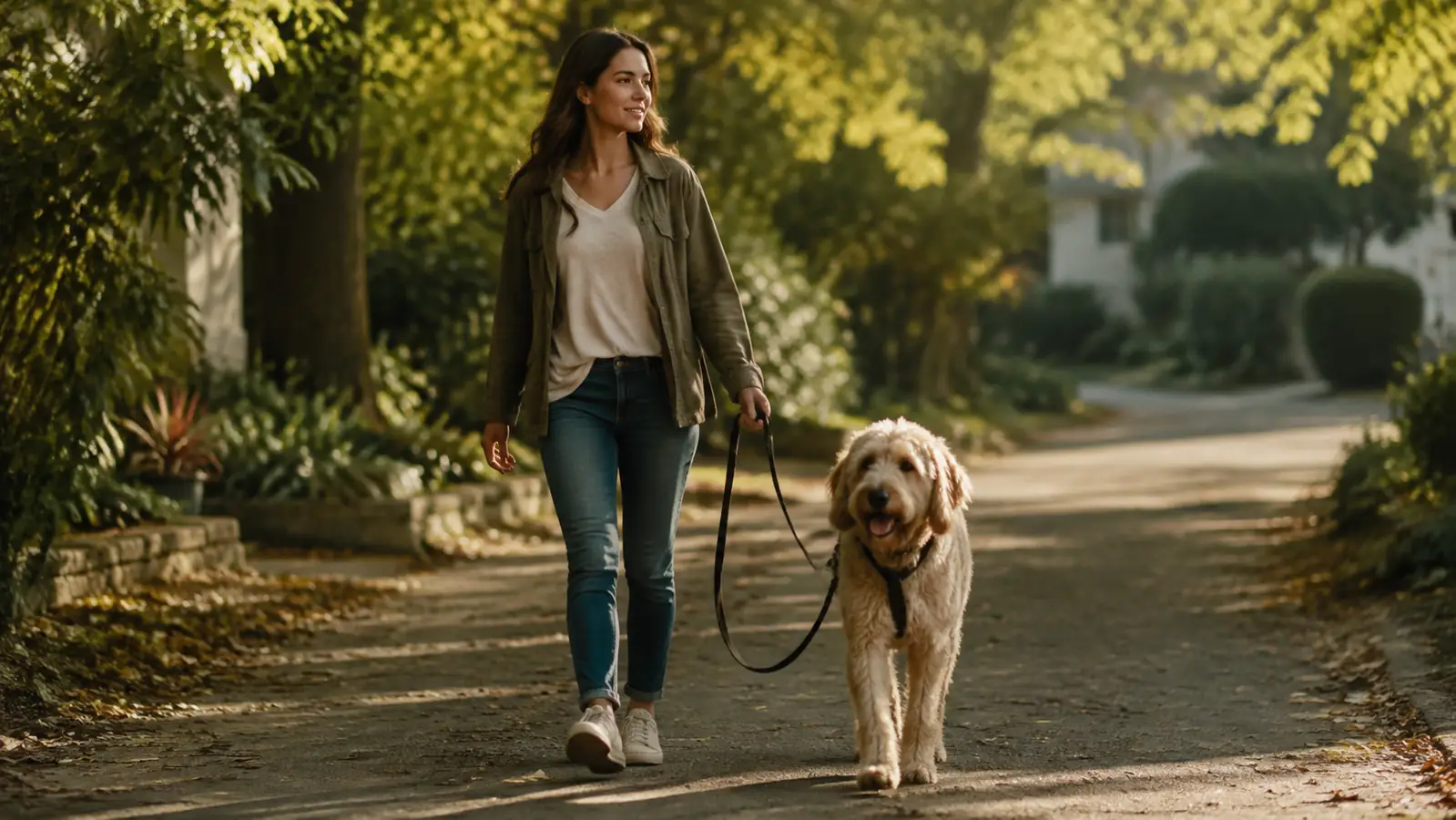
If your dog turns every walk into an arm-stretching tug of war, you have probably landed on the same two names as everyone else: the rabbitgoo no pull harness, the cheap padded one that shows up in every search, and the PetSafe no pull harness, the strap-style martingale the trainers cite. I have spent years around dogs that pull, and I have walked strong pullers with both, so let me settle it in one line. The rabbitgoo is the comfortable, easy-to-fit choice for a daily walker that pulls a moderate amount, and the PetSafe is the stronger deterrent for a genuinely hard puller or a dog with a hard-to-fit build. Both work, and they work for different dogs.
The reason the choice is not obvious is that these two go after the same problem through different mechanics. rabbitgoo is a padded vest with a front clip that gently redirects the dog's pull back toward you. PetSafe is a strap-style martingale that cinches around the chest and behind the shoulders when the dog lunges, applying pressure until the dog lets off. One is about comfort and redirection, the other about a firm physical stop. Which one suits you depends on how hard your dog pulls and how the dog reacts to pressure, so the comparison below is built around exactly those two things.
How the Front Clip Actually Works on Both
It helps to understand why the front clip matters at all, because both of these harnesses use one and it is the heart of the no-pull effect. A normal harness clips at the back, along the dog's spine, which is the strongest pulling position a dog has. When the leash is attached at the back, a puller simply leans in and wins. Move that clip to the front, over the chest, and the leash now crosses the dog's center of gravity, so a pull turns the dog sideways toward you instead of dragging you forward. The dog has to stop pulling to face where it wants to go, and that is the trick no-pull harnesses all share.
On the rabbitgoo, the front clip sits on a padded chest panel and simply turns the dog on a pull. It is gentle, and for a dog that only lunges after a squirrel or at the first corner of every walk, it is usually enough on its own, especially once a handler stops rewarding the pull by moving forward. The PetSafe does the same front-clip redirect but adds a martingale element: the strap that passes behind the shoulders tightens as the dog pulls, so the dog feels a firm squeeze across the chest and behind the front legs until it relaxes the leash. That tightening is what makes the PetSafe a stronger deterrent for a determined puller, and it is also exactly what makes it the wrong fit for a dog that finds pressure startling.
| rabbitgoo No Pull Harness | PetSafe No Pull Harness | |
|---|---|---|
| Price | Usually the cheaper option; a padded no-pull harness for a fraction of the name-brand cost | Priced higher, closer to a premium strap harness with a longer review history |
| Pull deterrence | Front clip redirects a moderate puller well; a determined hard puller can still drag through | The martingale cinch applies firm pressure the moment the dog pulls, a stronger stop for a determined puller |
| Comfort and padding | Padded chest panel and soft fabric, comfortable for daily walks and a dog that wears it for a long stretch | Straps only, cleaner and lighter but with no padding under a constant pull |
| Fit on hard-to-fit builds | Broad, adjustable vest fit that suits broad-chested and deep-chested dogs well | The wide-range strap adjustment is built for narrow-chested and hard-to-fit dogs that slip out of vests |
| For skittish or sensitive dogs | No cinching, so a dog that startles at throat or chest pressure usually stays calm in it | The tightening can startle a dog that is already nervous about pressure around the chest |
| Best for | A broad-chested daily walker with a moderate pull that you want comfortable gear for | A determined puller or a narrow-chested dog that needs a firmer physical stop |
The padded, easy-fit front clip that calms a daily puller
If your dog pulls a normal amount and you want something comfortable they will happily wear all walk, the rabbitgoo no pull harness gives you the front-clip trick at a reasonable price. Today's price is fair for a padded, adjustable vest with a long review trail behind it.
Amazon Check Today's Price on Amazon →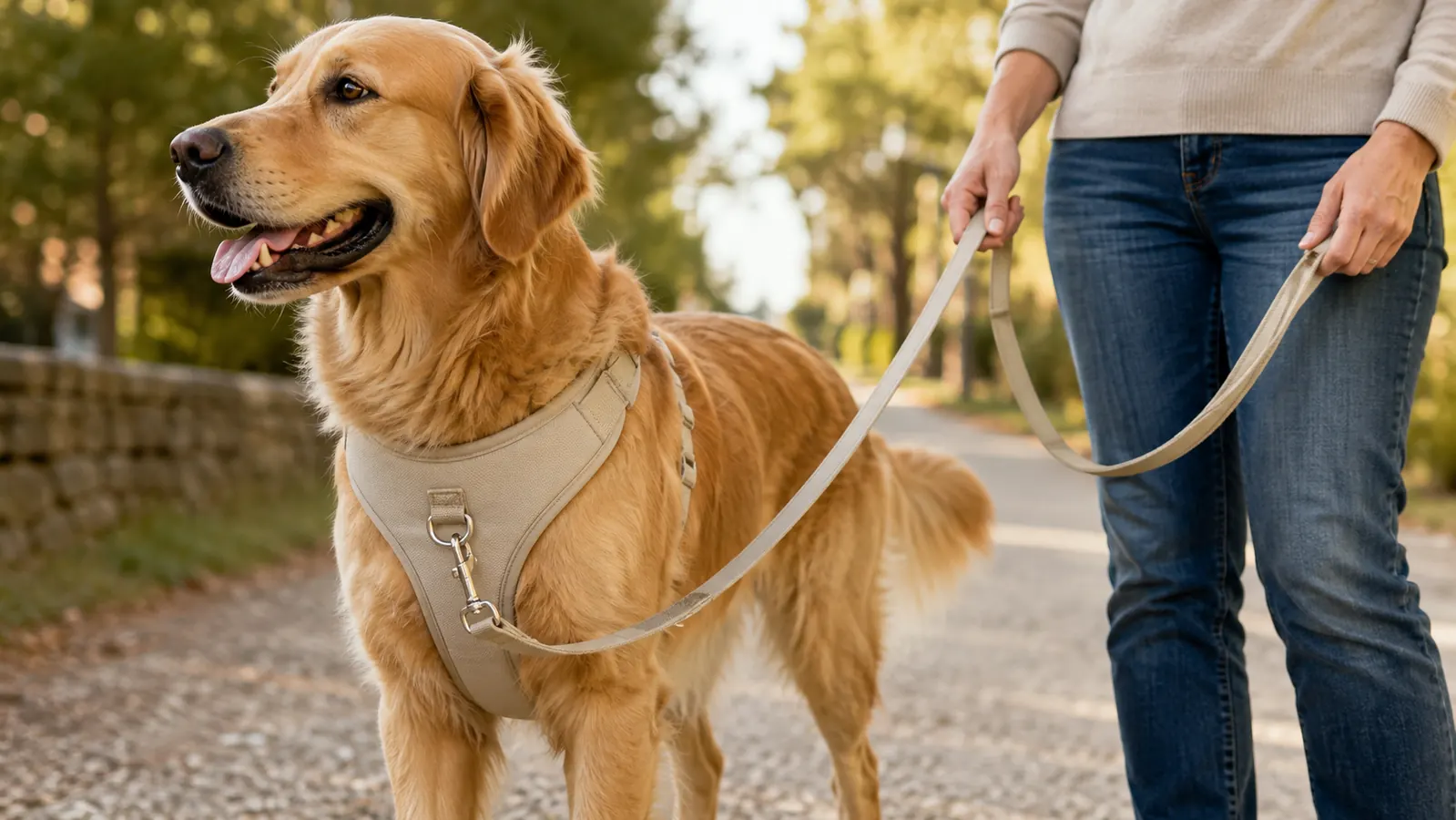
How I Compared Them
I walked a strong puller with both harnesses over the course of several weeks, using the same leash, the same routes, and the same rules of thumb for what counts as working. I watched three concrete things. First, whether the dog actually stopped loading the leash or just fought the harness. Second, how the harness sat and felt during a full walk, whether it twisted, chafed, or needed constant re-adjusting. Third, how easy it was to get on, take off, and size correctly, because a harness you have to fight to put on gets abandoned in a drawer.
What I found is that both harnesses are genuine products that do exactly what they claim, and neither is a gimmick. The difference is honest and it is about the dog. The rabbitgoo kept the daily walk under control with good comfort, and the dog wore it without complaint for long stretches, including the loose-fitting moments right after it was first put on, which is when most dogs decide whether a harness is going to work at all. The PetSafe stopped the hardest lunge more decisively, but it was a less forgiving fit on a broad-chested dog, and a nervous dog would have found the cinch too much. Neither is better in the abstract. Each is better for a specific kind of puller, which is what the rest of this piece breaks down.
Where the rabbitgoo Wins
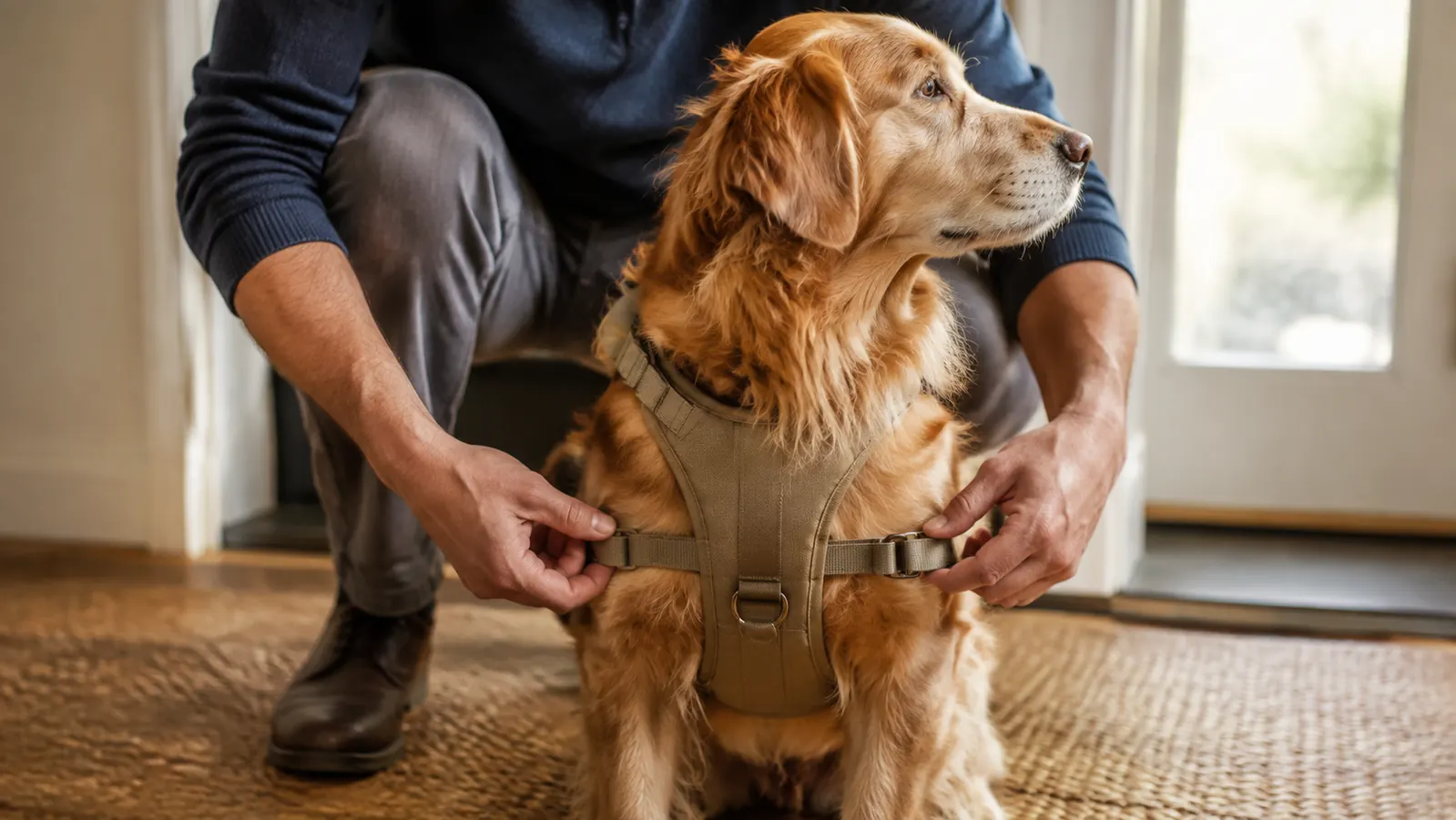
The rabbitgoo wins on comfort and ease of fit, which matters more than most people expect because a harness only works if the dog will wear it. The padded chest panel spreads the front-clip pressure across a wider area, so a dog that pulls gets a redirect instead of a strap digging in. Over multiple full walks the fit stayed put, it did not twist around the belly, and the soft fabric meant no chafing behind the front legs, which is where cheap harnesses wear and irritate. For a daily walker that wears gear for a long time, that comfort is the difference between a harness the dog accepts and one it fights. It is also the easier one to orient on a wriggling dog in a doorway, since the padded panels make the shape obvious before you even buckle it.
It also wins on value and on being gentle for the right dog. It is usually the cheaper of the two, and it gives you the front-clip redirect plus a back clip for the calm stretches of a walk, which the PetSafe does not offer. And because it has no cinching strap, it is a much better choice for a dog that startles at pressure around the chest or throat. Some dogs panic when a martingale tightens and that panic undoes a whole walk. The rabbitgoo never does that, so for a broad-chested, moderately pulling dog, or a skittish one, it is the safer, more comfortable answer that still fixes the pulling.
Where the PetSafe Wins
Be honest about the other side, because a comparison that concedes nothing is not worth reading. The PetSafe wins on raw stopping power, which matters the moment your dog is a genuine hard puller. The martingale cinch tightens behind the shoulders the instant the dog loads the leash, turning a lunge into a firm squeeze the dog has to relax out of. On a determined puller that the rabbitgoo's gentler redirect could not quite hold, the PetSafe delivered a decisive stop. If you are attached to a dog that drags you toward every tree or dog it sees, that physical stop is the feature you actually want, and it is the honest reason the PetSafe is the go-to for serious pullers.
The PetSafe also wins on fitting dogs that are hard to fit. Its wide-range strap adjustment was designed for the narrow-chested and deep-chested builds that slip right out of a padded vest. If your dog is built like a greyhound or anything between sizes, the harness that consistently slides off the shoulders is a problem no amount of padding fixes, and the PetSafe's strap system has been the reliable answer to it for years. That is why it is the recommendation for hard-to-fit dogs specifically, even though the rabbitgoo is the better all-around value for an average broad-chested puller. It is also the easier harness to store and carry, since it folds flat, which matters if you only use it for training sessions rather than every walk.
The padded vest won on comfort and ease of fit for a daily walker. The martingale won on a decisive stop for a determined puller and for hard-to-fit dogs. The honest answer is that most broad-chested, moderate pullers want the rabbitgoo first, and the hardest pullers or narrow-chested dogs want the PetSafe.
The Tradeoff Nobody Mentions
The honest catch with both of these is that a harness is a training aid, not a remote control. Neither one will stop a determined puller by magic on day one, and no harness replaces teaching a loose leash. The front clip and the martingale do the mechanical work, but the handler still has to stop moving when the dog pulls and reward the moment the leash goes slack, or the harness just makes pulling slightly less miserable for both of you. On the rabbitgoo specifically, a dog that pulls hard enough can still load the leash and pull through the redirect, and a determined dog will sometimes fight it. Expect to do a little of the training work yourself, no matter which one you pick.
There is also a sizing risk with the rabbitgoo worth flagging. Because it is a padded vest, it needs the right size to do its escape-resisting job, and a vest that is too loose or between sizes can be wiggled out of by a dog that works at it. Measure the chest and the neck and follow the size chart rather than guessing by weight, and recheck the fit as a puppy grows. On the PetSafe side, the tradeoff runs the other way: the firmness that makes it effective is the same firmness that can be too much for a nervous dog, so it is not the first pick for a skittish puller. And if your dog's pulling is tied to fear or excitement that gear is not touching, those are conversations for a trainer, not something a harness fixes alone.
Who Should Buy Which
Buy the rabbitgoo no pull harness if your dog is a typical broad-chested, moderately pulling walker, if you want something padded they will comfortably wear all walk, or if your dog is on the sensitive side and reacts badly to a cinch. It is the better value, the better everyday fit, and it comes with the useful second clip for calm stretches of a walk. For most households with an average puller, this is the smarter first purchase, and it will last through plenty of daily walks before it shows real wear.
Buy the PetSafe no pull harness instead if your dog is a determined hard puller that overpowers a gentler redirect, or if your dog has a narrow-chested build that keeps slipping out of padded vests. Its martingale stop is the stronger tool for the hardest cases, and its strap adjustment is the reliable fit for dogs that are hard to fit. For the strongest puller or the hardest-to-fit dog, the PetSafe is the honest choice, even at the higher price. For everyone else, the rabbitgoo gets you the front-clip fix for less and more comfortably.
The padded front-clip harness for a comfortable daily fix
If you have a typical broad-chested puller, the rabbitgoo no pull harness gives you the front-clip redirect, a padded comfortable fit, and a back clip for calm stretches, all at a price that beats the premium strap. Today's price is fair for a harness designed for the long hours of daily walking.
Amazon Check Today's Price on Amazon →